
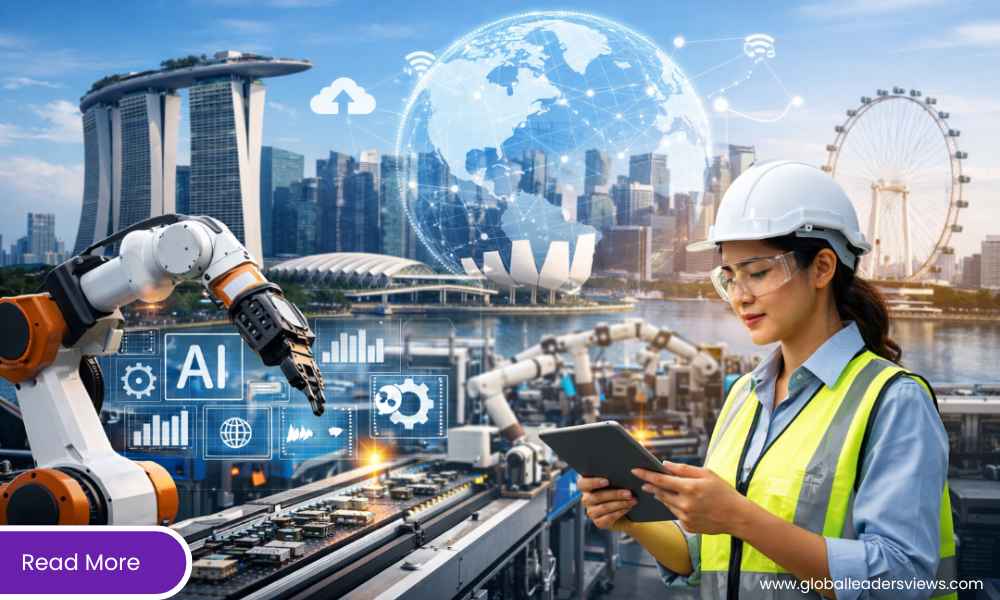
As the nation Singapore Manufacturing gets ready for its next stage of economic expansion, Singapore’s manufacturing sector is at a critical turning point. The industry, which was formerly characterized by conventional manufacturing lines, is currently undergoing changes due to automation, digital transformation, use of AI, and changes in global supply chains. The question now is not if change will occur, but rather how rapidly businesses, people, and policymakers can adjust to it.
A Stable Industry Amidst Worldwide Unrest
Singapore’s manufacturing sector, which includes chemicals, electronics, biomedical, and precision engineering, continues to be a major contributor to the country’s GDP.
- Manufacturing accounts for around 20–22% of Singapore’s GDP, according to government estimates, thanks to robust international demand and a stable business climate.
- However, everyday operations at factories and distribution centers are still under strain due to manpower shortages, growing operating expenses, and worldwide uncertainties.
The Sector’s Main Obstacles
1. The labor gap and high operating costs are the sector’s main challenges.
Companies say it’s hard to find qualified engineers and technicians.
Profit margins are being squeezed by rising energy and leasing costs.
2. Variations in International Trade
Changes in international tariffs and geopolitical tensions continue to have an impact on supply chains.
Industries that depend on exports must deal with erratic order quantities.
3. The Need for Quicker Digital Change
Despite Singapore’s advanced adoption of smart factories, many small and mid-sized businesses still face the following challenges:
- High setup expenses for digital devices
- Cybersecurity frameworks are necessary.
- Educating employees on automation and artificial intelligence tools
Stay Updated with the Latest Headlines
Strong Prospects Ahead
1. Productivity Driven by AI
Manufacturers can accomplish the following with AI and on-device automation:
- Predictive upkeep
- Quicker quality assurance
- Optimizing manufacturing in real time
Tech sector forecasts indicate that this change might increase industrial efficiency by 20% or more.
2. Diversification into Industries Prepared for the Future
There are new prospects for growth in:
- Biomedical production
- Innovation in semiconductors
- Eco-friendly materials
- Components of clean energy
3. Government Assistance and Industry Cooperation
The Singapore Manufacturing Federation (SMF) offers industry participants partnerships, grants, and support through its programs.
Green Manufacturing’s Ascent
To remain competitive in the global market, more businesses are implementing energy-efficient technologies, waste reduction strategies, and sustainable production. Building a Greener Singapore.
Extension of Training for Advanced Workers
The talent pipeline is strengthened by new training modules that teach robots, analytics, and smart-factory operations to young professionals and mid-career personnel.
Visit: Latest News
Future Perspective
Both opportunity and challenge will influence Singapore’s industrial future. The potential ahead, especially in AI, smart factories, and sustainability, are significant drivers of long-term growth, even while global challenges, labor shortages, and transformation costs continue to be serious worries. Singapore’s manufacturing industry is well-positioned to both maintain its resilience and emerge as a worldwide leader in next-generation production thanks to robust government support and growing innovation.
Automation and AI Are Revolutionizing Production
AI-powered robotics, smart factories, and predictive maintenance technologies are being quickly adopted by Singapore’s manufacturing industry. Production lines that are fully automated will soon maximize productivity, lower error rates, and decrease downtime. Businesses that combine supply chain management and AI analytics will have a competitive advantage, guaranteeing Singapore’s continued status as a center for precision, high-tech manufacturing.
Using Sustainable Manufacturing to Gain a Competitive Edge
The new manufacturing period will be characterized by environmental responsibility. In addition to lowering operating expenses, carbon-neutral procedures, smart energy management, and circular economy activities will increase market attractiveness internationally. Eco-friendly technology adoption by manufacturers will draw green investment and worldwide collaborations, establishing Singapore as a pioneer in sustainable industrial innovation.
Visit: Latest News
Possibilities for International Cooperation and Innovation
Singaporean manufacturing’s future depends on cooperation with international tech hubs. Manufacturers will be able to build products more quickly and adapt to changes in the market thanks to advanced R&D collaborations, IoT integration, and digital twin technologies. Singapore can turn obstacles like growing expenses and a lack of skilled workers into chances for expansion and worldwide leadership by cultivating a culture of constant innovation.
A Special Conversation with Industry Leaders.
- Ken Dychtwald: The Thought Leader Who Turned Curiosity into a Global Movement on Aging and Human Potential
- Fredrik Laseen: Crafting Authentic Luxury Through People, Culture, and Purpose
- Bank of Spain Urges Caution in AI Tool Adoption
- Musk’s SEC Settlement: A Closer Look at the ‘Red Flags’
- The US Stock Market Rises Today Due to Another Alphabet Rally

