
Milan Dordevic: Navigating Two Decades of Innovation and Leadership Internationally Across Industries

You’ve got to be serious at some things, at a particular age, and time. Career is one such aspect that one needs to be focused on. Launching his career in Europe and later expanding his influence in the USA, Milan Dordevic, a seasoned tech leader, is driven by a deep passion for organizational agility, project management, and data analytics. Over nearly two decades, he is boosting innovation and productivity in diverse sectors, from game development studios to Smart Cities and IoT platforms, and from Autonomous vehicles to the EdTech realm. Each step of his journey is marked by unique challenges, transformative solutions, and resounding triumphs.

Navigating Global Industries

Embarking on a captivating journey that unfolded across the global business landscape, Milan Dordevic’s odyssey commenced in the academia of Serbia, where his fascination with organizational sciences and project management was ignited. Over the span of nearly two decades, he traversed diverse industries, from the dynamic realm of game development studios and the intricacies of Smart Cities and IoT to the traditional yet ever-evolving automotive sector. Each industry presented its unique challenges, akin to learning a new language infused with project management principles.

The turning point materialized with an exciting opportunity at Proctorio, a chapter that unfolded amid the challenges of the COVID-19 pandemic. Joining amidst the outbreak, Milan witnessed the company’s staggering growth of over 600% within a year, underscoring the pivotal role the company played in supporting education during unprecedented times. Transitioning into the education sector, Milan assumed the role of leading innovation and development, navigating the uncharted territory with a mission to ensure academic integrity in online assessments.

The blend of technological innovation and an unwavering commitment to the cause kept Milan on his toes. The challenges faced in this new landscape were distinct, with higher stakes as the education of millions hung in the balance. Milan’s leadership became instrumental in steering Proctorio through the dynamic terrain, making a profound impact and crafting an invaluable learning experience.

Amidst the hurdles and triumphs, Milan embraced the philosophy that every challenge conquered is akin to scaling a new peak. The vantage point from the summit, alongside the dedicated team at Proctorio, is nothing short of gratifying. Milan Dordevic’s narrative embodies resilience, adaptability, and an unyielding pursuit of success, a testament to the transformative journey he continues to navigate in the ever-evolving tech and education landscape.

Pioneering Integrity in Online Education

Proctorio transcends the realm of a conventional company; it stands as a mission-driven venture, envisioning a world where every student, regardless of their location, has an equitable opportunity to demonstrate their knowledge. The core mission revolves around ensuring integrity in online assessments, with a profound commitment to making education both accessible and credible. Its vision is elegantly simple yet deeply impactful: to furnish a fair and secure online assessment platform that transcends geographical boundaries, catering to everyone, everywhere, and at any time.

The company’s innovative ethos embraces the integration of cutting-edge AI and machine learning technologies. It extends beyond mere exam proctoring; it strives to level the educational playing field for students globally. Proctorio’s far-reaching impact is evident in its support for thousands of educational institutions and providers, proctoring over 20 million exams annually. In the digital age, where traditional classroom confines dissolve, it emerges as a guiding force, extending a helping hand to educational institutions in upholding academic integrity.

At the heart of Proctorio’s essence lies a commitment to fostering a culture of integrity, cultivating the seeds of knowledge and fairness in the education sector. Each day is a purposeful stride towards creating a positive ripple effect in the vast ocean of online education, embodying a transformative force in the educational landscape.

Orchestrating Leadership Harmony and Collective Growth

In the realm of leadership, Milan Dordevic exhibits a mastery akin to orchestrating a harmonious melody, where each team member contributes a unique tune to the ensemble. Honored with the prestigious “Outstanding Leadership Award,” Milan’s leadership journey revolves around fostering a culture of continuous learning and adaptation, guided by mantras like “learning by doing” and “we rise by lifting others.” With over 15 years of dedicated expertise in complex and remote project and product management across diverse continents, Milan embodies the essence of dynamic leadership.

His narrative extends to volunteering stints at SeedSpot, PMI Phoenix Chapter, and the SAM Network, emphasizing the creation of an environment conducive to growth. Whether leading transformative projects in previous roles or spearheading innovative initiatives at Proctorio, Milan’s approach is rooted in aligning teams with organizational goals. Simultaneously, he champions a culture of ownership and accountability, transcending the mere pursuit of milestones. For Milan Dordevic, leadership is about co-creating a journey marked by collective growth, where each encountered challenge becomes a stepping stone for organizational and personal evolution.

Pioneering a Technological Revolution in Online Education

In Milan’s vision for the long run, he sees an expansive tableau marked by continuous learning, innovation, and steering transformative change. The narrative unfolds as a harmonious blend of finesse in data-driven decision-making, organizational strategy, and the infusion of AI and automation into every segment. The aim is to craft a vibrant tapestry of innovation resonating through the organizational corridors.

When focusing on Proctorio, Milan perceives a vast canvas with a vibrant palette, driven by the grand ambition of leading a technological revolution in online education. The goal is to foster a culture where innovation is not just a buzzword but a driving force. Each strategic stride is directed not only at upholding academic integrity but also at propelling online learning into realms where accessibility, credibility, and fairness become the standard. The clear vision is to establish the organization as synonymous with groundbreaking solutions that redefine the paradigms of online education on every continent. Milan envisions cultivating a culture that thrives on innovation, integrity, and inclusivity, making each day a step closer to a future where education is recognized as a right, not a privilege.

Charting a Visionary Course in Tech Leadership

In the foreseeable future, Milan envisions a deepening commitment to continuous learning, expressing his insights through articles featured on the Forbes Technology Council. These articles transcend mere textual content, sparking dialogues within the tech community. His enduring association with SeedSpot will thrive as he mentors aspiring entrepreneurs, providing invaluable support in their journey to success. Concurrently, Milan’s involvement in the Project Management community in Arizona extends beyond knowledge sharing; it is a dedication to nurturing a space conducive to collective growth.

These diverse facets of Milan’s professional landscape intertwine like threads, weaving into the fabric of the transformative change he aspires to orchestrate. The pursuit of knowledge beckons, with a third master’s degree in Business Analytics on the horizon, potentially accompanied by a playful venture into a Ph.D. realm.

Within the realm of Proctorio, each project undertaken represents a strategic move toward refining educational experiences, with every challenge viewed as an opportunity to innovate. Milan perceives the real change brewing at the intersection of technology and human touch. Positioned at the helm, he plans to navigate the unfolding change, ensuring that every step contributes to creating profound impacts in the landscape of online education.

Navigating Professional Success and Family Joys

In the intricate dance of managing the demands of a challenging profession and a vibrant family life, Milan, a father of three, skillfully navigates the delicate balance. Drawing parallels between project management methodologies applied in his professional domain and orchestrating personal responsibilities, he employs a disciplined yet flexible approach.

His meticulously organized calendar stands as a testament to this structured methodology, meticulously filled with work deadlines, family events, and community engagements. Milan ardently allocates his time with precision, ensuring a harmonious coexistence of his professional endeavors and personal commitments. Although the schedule is tight, the gratification of achieving professional milestones juxtaposed with the joy reflected in his family’s smiles makes the concerted effort worthwhile.

Staying organized is a key component in Milan’s strategy, facilitating the carving out of valuable time for volunteer work, a facet that enriches his life. Despite the constant juggling act, the essence of Milan’s approach lies in the art of prioritization, extracting the maximum value from every moment. Through a skillful blend of meticulous planning, adaptability, and an earnest desire to make a positive impact, Milan maneuvers through the complex labyrinth of professional and personal responsibilities, embodying a holistic approach towards a fulfilling and meaningful life.

Proctorio’s Cultural Symphony

At Proctorio, Milan fosters a corporate culture that seamlessly blends the dynamism of a startup with the stability of an established enterprise. Despite the geographical spread across four countries and three continents, the company’s global team is united through daily sync-ups, maintaining a shared vision and purpose. With offices in the US, Serbia, Germany, and Argentina, its international presence is underpinned by a commitment to common values, harmonizing diverse perspectives rooted in local cultures. Monthly townhall meetings serve as a platform to celebrate achievements from every corner of the organization, reinforcing a sense of unity.

Milan’s proactive initiatives, such as orchestrating engineering internships that evolved into an in-house R&D team in Scottsdale, exemplify a dedication to cultivating a culture of learning and growth. Proctorio transcends being solely a tech company, placing equal emphasis on shaping an environment that is both evolving and lively, akin to a startup, yet grounded and reliable like an established enterprise. The company’s office serves as a hub of innovation with IoT implementations driven by the talented R&D team, offering smart solutions that cater to the diverse needs of all employees. It’s a culture where agility meets thoughtful contemplation, and innovation flourishes while remaining anchored to core values.

Navigating the Technological Odyssey for Meaningful Impact

In the expansive realm of technology, Milan Dordevic’s journey has been a captivating odyssey marked by a profound passion for innovation and a commitment to meaningful impact. Having traversed this dynamic landscape for a significant part of his career, Milan’s vision for transformative change is deeply rooted in his wealth of experience. His foray into leading autonomous vehicle projects at BMW reflected a dedication not only to smart machines but also to shaping a safer and more efficient future of transportation. Prior to this, he steered a game development studio to become not just the most productive but a thriving space for creativity.

Milan’s commitment to innovation is underscored by the recognition of his endeavors, including securing three Innovation Awards from the Innovation Fund Serbia. Over the last decade, his narrative unfolds with the implementation and development of diverse technologies such as IoT, AI, AR/VR, SaaS, and Cloud solutions. These ventures transcend mere technological advancements, embodying a mission to bridge the gap between the digital realm and tangible benefits.

Now at Proctorio, Milan’s mission goes beyond code and algorithms. Leading a global force in online proctoring, he supports over 20 million students and exams annually, ensuring fair play in the domain of digital education. His impactful journey has been acknowledged with prestigious recognitions in 2022 and 2023, including an upgrade to IEEE Senior level and the Outstanding Leadership Award for his significant contribution to the technology field.

Given the opportunity to wave a wand and instigate changes in the tech industry, Milan envisions cultivating a culture of innovation grounded in ethical practices. He aspires to foster a collaborative ecosystem where ideas resonate across the industry rather than flourishing in isolation. For Milan, technological advancements are not just an end but the means to forge a more equitable, efficient, and insightful world. Each project under his leadership represents a deliberate step toward this envisioned change, signaling a continuous exploration and transformation in the vast expanse of the tech landscape.

Shaping the Future of Online Education with AI

Proctorio stands as a trailblazer in the AI realm, its commitment to artificial intelligence tracing back a decade—a testament to its foresight in navigating the tech landscape. In an era dominated by the buzz around Generative AI, the team has already immersed itself in the intricacies of artificial intelligence, attuned to the early whispers of a technological revolution. This steadfast dedication positions the company not as a mere participant in the AI wave but as a shaper of its course, exemplifying a profound and enduring impact in the education technology sector.

The core philosophy of Proctorio extends beyond the adoption of AI; it revolves around harnessing its potential to establish a landscape of fairness and credibility in online education. Every algorithm meticulously crafted and each model refined serves as a deliberate stride towards creating an environment where assessments are characterized by genuine and authentic evaluation. As it gazes into the future, the anticipation of new projects and continuous enhancements reflects not just an aspiration to keep pace with the AI wave but a commitment to lead it.

Proctorio’s reliance on face detection algorithms stands as a cornerstone, ensuring the authenticity of online assessments by verifying the identity of the test-taker. The incorporation of Blockchain technology further underlines the company’s commitment to ethical sourcing and training of face detection models through distributed collection of images. Transitioning to the next page unveils its Plagiarism platform, a vigilant guardian defending authorship and document integrity with unwavering dedication.

The magic unfolds in the realms of digitalization and automation, where Proctorio streamlines processes to not only be efficient but also a breeze to navigate through. This commitment to technological advancements is more than a pursuit of innovation; it is a pledge to revolutionize the landscape of online education, ensuring it remains fair, credible, and technologically robust.

Insights for Budding Entrepreneurs

Venturing into the tech world is an exhilarating journey filled with potential. In his own words, “My advice to budding entrepreneurs is to stay agile. The tech landscape is ever-evolving, and being adaptable to change is crucial. Don’t shy away from taking risks; they are the stepping stones to innovation and growth. Being at the forefront of information is vital. Stay updated, be inquisitive, and immerse yourself in continuous learning to stay ahead in the game. Lastly, determination is your fuel. There will be hurdles, there will be setbacks, but with a determined spirit, keep marching forward towards your vision. Each challenge is a lesson in disguise, learn from it and keep evolving. The blend of agility, risk-taking, perpetual learning, and unwavering determination will not only help you navigate the tech waters but thrive and make a meaningful impact”.

Visit our: Latest Magazine Section

Yossi J Amuial: Steering the Course of Innovation and Excellence at Executive Tag & Title Svcs, Inc.

In the vast sea of leadership, true leaders emerge not by just navigating challenges but by setting a new direction. Yossi J Amuial is a beacon of such leadership, illuminating the path for others in the automotive industry. As the esteemed CEO of Executive Tag & Title Services (ETTS), his journey serves as a compelling narrative of perseverance, innovation, and transformation.

The Making of a Visionary

Yossi’s expedition into the realm of leadership began with an insatiable thirst for growth, both on personal and professional fronts. Recognizing an untapped reservoir of potential in the automotive sector, he identified avenues of innovation, particularly in the labyrinthine domains of title and registration. His spirited dedication to harnessing technology, coupled with his acute grasp of organizational culture, gave birth to ETTS. With a crystalline mission, ETTS emerged with a goal: decoding the intricacies of tax computations and paperwork, especially for dealers treading across state boundaries.

Empowering Teams, Building Legacies

Central to Yossi’s leadership modus operandi is his inherent belief in the power of collective effort. For him, nurturing a motivated team goes beyond boardroom meetings. He invests time in open dialogue, ensuring every voice feels valued. These aren’t just conversations; they’re the building blocks of a culture where ideas flourish, challenges transform into opportunities, and innovation becomes a daily dialogue.

Redefining Tomorrow, Today

Gazing into the horizon, Yossi’s vision is resolute. With a steely determination, he envisages steering ETTS to even greater heights, ensuring it remains the gold standard in automotive services. His passion extends beyond service quality; he dreams of a future where technological innovations are the heartbeat of the industry, ensuring the title and registration process evolves into a masterclass of efficiency.

A Day in Yossi’s World

At the crack of dawn, Yossi sets the wheels of ETTS in motion with a meticulously crafted agenda. Morning meetings aren’t mere rituals; they’re the strategic compass that guides the company’s daily endeavors, ensuring a synchronous stride towards both immediate and overarching goals.

A Dance of Balance

For Yossi, life isn’t a binary between the personal and professional. Instead, it’s a delicate dance, and he’s mastered the art of balance. His philosophy? The dedication that defines his professional endeavors is equally mirrored in his personal realm. Supported by the unwavering foundation of his family, Yossi gracefully waltzes through the demands of both worlds.

Charting New Destinies

With eyes set on the future, Yossi’s aspirations soar. He dreams of not just being a CEO but becoming an unparalleled force in the industry. His blueprint for the future is intricate: fostering strategic alliances, spearheading tech-driven revolutions, and embracing the power of customer feedback to carve a path of unmatched excellence.

A Message to the Torchbearers of Tomorrow

Yossi’s message to budding CEOs is profound yet simple: When destiny knocks, answer with conviction. Embrace leadership, shoulder responsibilities, and strive for transformation. For in those moments of decision, legends are born.

In Yossi J Amuial, the automotive industry finds not just a leader, but a visionary. Through his journey and invaluable insights, he continues to inspire, challenging us all to drive towards a brighter, innovative tomorrow.

Visit our 2025 Latest editions

Lisa Anna Palmer: A Journey of Empowerment, Vision, and Impact

You can hate more but you can never love less. The hope to make the world a better place keeps us all going. In today’s competitive world, helping those in management positions is also crucial so they can make better decisions and have clarity in life. With the same vision, Lisa Anna Palmer is helping people in management positions to love their life as a leader. Lisa is the Founder and CEO of Light Your Leadership Inc

Lisa is on a purpose roadmap that outlines how to lead effectively in a changing world. Additionally, she and her team at Light Your Leadership Inc. is growing a platform that shines a light on leaders who put people and the planet first. Thus, we at CIO Business World unleash the full potential of Lisa through an interview to learn about the techniques she uses to bring change.

Below are the highlights of the interview:

Brief our audience about your journey as an entrepreneur. What inspired you to start your own business?

I burned out three times by the age of 38. After spending two decades working within corporate Human Resources & Organizational Development and Organizational Effectiveness roles, both as a management consultant at a Big Six Firm and then within HR roles at two Canadian Crown Corporations, I was inspired to start my own company. As my consulting and coaching practice took off, I realized that I wanted to focus on leadership development because lack of leadership is at the root of every organizational and societal issue. Great leadership is at the heart of every success.

Tell us something more about your company and its mission and vision.

Our vision is to make the world a better workplace for all by helping those in management positions to learn to love their life as a leader. We do this using the principles featured in my international bestselling book, Light A Fire In Their Hearts: The Truth About Leadership and the SCALE approach, which stands for Self-Awareness, Connection, Accountability, Legacy, and Elevating others. These help managers and executives take their leadership to the next level as they learn tools and techniques to unleash potential and forces for good in themselves and others.

In addition, we have the PURPOSE Road Map, which outlines how to lead effectively in a post-pandemic world, including:

1. Putting people and the planet first

2. Understanding the struggle

3. Renewing the culture

4. Psychological safety and physical security

5. Office set-up and technology, including AI

6. Service-minded leadership

7. Evolving and elevating leadership capacity at all levels

We are also dedicated to growing a platform that shines a light on leaders who put people and the planet first.

Where do you envision yourself to be in the long run, and what are your future goals for your company?

I envision growing Light Your Leadership Inc. by establishing a Fractional Chief Leadership Officer practice. My goal remains to do my part to ease workplace suffering in as many organizations as possible and make work meaningful and joyful so that people want to be, do, and feel their very best. We need to bring back pride in work well done and strive for excellence in healthier ways that bring about good, rather than using methods and approaches that harm people and the environment. 

I plan to raise awareness of CEOs and Boards so they see the importance of introducing and prioritizing Chief Leadership Officer roles. With over 50% of managers looking to leave their position (Gallup), 70% of people offered promotions saying “no” (Ivanti), 69% of managers being afraid of speaking to their employees (Harris Poll), and 57% of employees are reporting that they are being disrespected by their manager (Pew Research), we need to focus on leadership development at all levels, all ages, and all backgrounds. 

Waiting to send managers to a workshop when they get promoted is insufficient.  To steer organizations, society, and our economy in the right direction, we need to elevate leadership so that it is integrated as a way of being from the start. Leadership development needs to start early and to be viewed as lifelong learning.

I am also working on my second book, Leadership In A Post-Pandemic World, to explore a revolutionized post-pandemic workplace and organizational renewal. 

In the near future, where do you envision yourself, and how do you plan to accelerate and drive forward the process of change?

I took stock about two months ago about what differentiates me. I had the realization that prior to launching my own company, I had spent most of my time in corporate settings advising and coaching vice presidents and aspiring vice presidents (i.e., directors and senior directors). I also found that coaching managers and helping them become better versions of themselves led them to realize their deep discontent with their current employers. They then beg me to help them leave their company because they don’t have the formal authority to implement change and feel stuck with traditional command and control senior managers.

This pained me, so I’ve decided to focus on coaching vice presidents and aspiring vice presidents (and equivalents) because they have greater authority and access to resources. Therefore, when they transform, they can stay with their current employer and effect real and meaningful changes to their workplace. This benefits their downline and thus helps middle managers in the long run. They are also the CEO feeder group, so when we help them be the best version of themselves, we help the entire organization solidify its future. 

Outstanding leadership is contagious as elevated leaders become role models for others. Investing in vice presidents and aspiring vice presidents makes workplaces better. Strong, compassionate, courageous, and competent transformational executives know how to grow and inspire other leaders, which creates a powerful ripple effect at all levels. This is the key to delivering results in healthier and more sustainable ways. Leadership development underscores strategic advantage and underpins excellence. Case in point, a Metrix Global study found that executive coaching can have a 788% return on investment (ROI) based on factors including increases in productivity and employee retention (Forbes, 2023). 

Coaching top managers to love their life unleashes their human potential. When leaders can connect with people they work with from this elevated place of purpose, passion, and fulfilment, the potential for their organization’s success grows exponentially. 

As a successful Women leader, how do you manage to strike a balance between your professional commitments and personal life?

This is yet another example of lifelong learning because while I strive for balance and have made much progress, I am still not quite where I would like to be. However, I’d like to invite leaders to reframe this whole concept: rather than try to strike a 50/50 balance between work and personal life, perhaps it would be more effective and less frustrating to harmonize our work and personal life.

What I mean by that is that we have different seasons, and life is dynamic, not static. So, rather than strive for balance or a 50/50 split between my work and personal life, I seek to find the right mix that feels good: when life is harmonious, I feel energized, healthier, more aligned, and in flow.

I do this by checking in with myself because sometimes I tend to spread myself too thin. I’ve learned to recognize the signs of burnout earlier; in my case, I get fatigue and joint pain because of fibromyalgia.  When I get the first hint, I know it is time to pull back and spread out my appointments to leave more room for self-care and downtime in my calendar. Also, of crucial importance is that I have learned to set boundaries, manage expectations, focus on priorities, to simplify processes, leverage technology and delegate more.  

In a male-dominated industry, how have you overcome challenges and stereotypes to succeed as a woman entrepreneur?

I don’t feel that I have overcome it. Rather, it is an ongoing exercise in raising awareness to counteract unconscious biases. As nurturers, women tend to be recognized as solid career and life coaches, human resources managers, and experts in self-leadership or coaches for middle managers. While there have been advances with upcoming generations, when it comes to being considered as thought leaders or coaches for senior managers, we have yet to break through the glass ceiling, particularly with CEOs and VPs who are Gen-Xers or Boomers.

I can see why this happens as mainstream celebrity leadership experts, such as the late Bob Proctor, John C. Maxwell, Patrick Lencioni, Kouzes and Posner, etc., tend to fit the stereotype. Don’t get me wrong, I really admire what these men have done to advance organizational leadership, and I am grateful to have studied their work. However, society must recognize that women can also advise and coach top leaders just as well as any man. 

Both men and women in senior management need to check their biases. Men also need to step up as allies, as everybody wins when more women get involved in leadership development at the highest levels of the organization.

What advice would you give to aspiring women entrepreneurs who are looking to make a mark in their respective industries?

I suggest they practice the 8 Ps of Ignition that I introduced in the book Light A Fire In Their Hearts. They are Profundity, Passion, Purpose, Perseverance, Professionalism, Play, Philanthropy, and Prosperity. We also need to support one another and not listen when we are told that we need to ‘play the game’ or ‘be mean’ to get ahead. This is what keeps us down as a collective. We need to stop playing small and get out of our comfort zones to be seen and to share our platform with others so that we can all get an opportunity to shine.

What are your thoughts on the evolving landscape of entrepreneurship and business in the 21st century?

Entrepreneurs play an essential part in shaping the landscape and driving its evolution. My hope is that through our businesses and our life’s work, we influence socio-economic forces toward doing what is good for people and the planet. We need to hold ourselves, politicians, and community leaders accountable for driving the economy to grow and realize profits in healthier and more sustainable ways. We have the power to influence consumer behaviours through our advertising, research, speaking, writing and storytelling. Let’s help the masses make better choices that will help humanity and all living beings stick around a while longer and strive for a better world for all.

Read About us

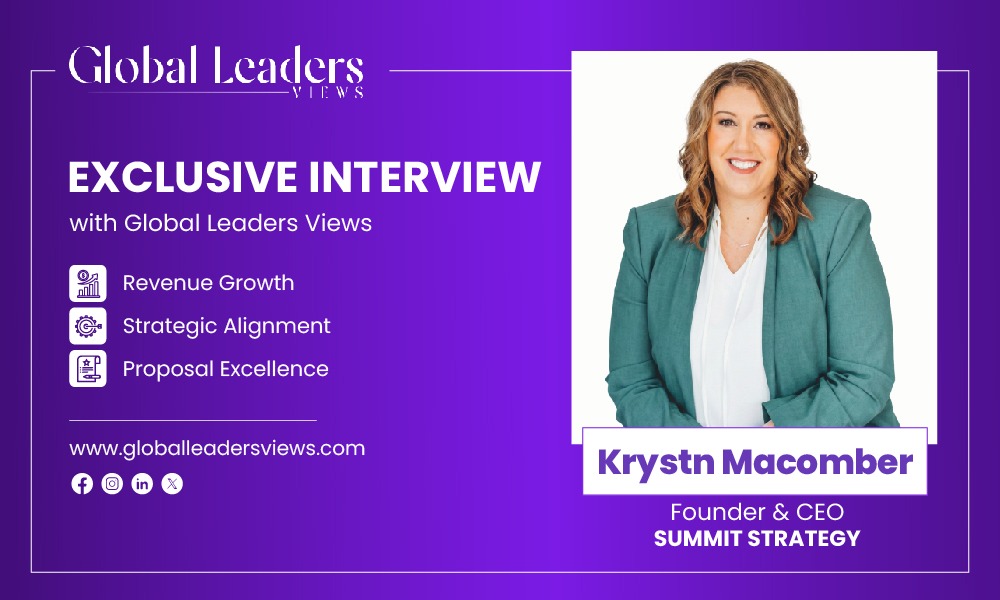
Krystn Macomber: From Athlete to Entrepreneur: The Journey of a Visionary CEO

Krystn Macomber knows winning.

Going back to her days as a D1 basketball player at the University of Richmond, the Founder and CEO of Summit Strategy, a game-changing proposal development and marketing consulting firm, understands what it means to earn wins for her clients no matter the challenge.

“I’ve always been ambitious,” said Krystn. “As a kid growing up in the mountains of North Carolina, I’ve always had big dreams and set lofty goals for myself. This first manifested for me in sports where I became an elite basketball player, but this theme of embracing challenges has played out throughout my professional career.”

While Krystn’s roots are in South Appalachia, her career began when she moved to Washington, D.C. after finishing her undergraduate degree in business. She quickly worked her way through the corporate world, scaling the ranks until she became a prolific proposal manager,  and writer, and leader  for federal government contracts. As each position transitioned to the next, Krystn realized she had a natural ability to build teams, departments, and processes.

It was during these years that Krystn’s vision for what would become Summit Strategy emerged.

“What I deeply wanted was to captain my own ship,” she said. “I wanted to lead a team of driven, forward-thinking professionals who cared about winning for their clients as much as I do. While the experience in corporate America was invaluable, I didn’t want to spend my career advancing someone else’s financial interests. I wanted my working years spent leaving a dent in my industry and being a difference maker to my team and to my clients.”

Founded on the principles of care, innovation, and commitment, Summit Strategy swiftly established itself as a force in the market. A 100% woman-owned enterprise, Summit has taken on more than just turning a profit. For Krystn, she and her team carry the responsibility of redefining industry norms and fostering real change.

“At Summit Strategy, we believe we’re more than just another small business,” she said. “I want to reach the end of my working years knowing I made a real impact and changed the way my peers, colleagues, and competitors do business.”

On the business side, Krystn’s vision for Summit Strategy is clear – to set the new industry standard for integrated sales + marketing solutions that empower professional service firms with effective growth strategies through game changing strategic planning, proposal support, branding + marketing with purpose, and best practices training. By helping firms tell their stories, fueling their potential, and achieving sustainable competitive advantage, Summit Strategy is shaping a generation of industry leaders who pioneer positive social impact.

For Krystn, pushing Summit Strategy to be both a cultural difference maker and a financial powerhouse are one in the same. Winning for her clients means shifting the industry towards increased equity for everyone involved. This task can feel like scaling a mountain over and over again, Krystn said, but it’s a challenge Krystn is willing to continually take on.

“The challenge has been to navigate running a small business while maintaining my vision of what a proposal development and marketing consulting business could be. It’s at times been lonely, frustrating, and exhausting while at the same time exciting and affirming that it’s exactly what I want to be doing. It’s hard to think beyond the day-to-day operations and expectations to exceed, but I’m embracing the challenge every day to continue focusing on the bigger picture.”

So far, this perspective has paid off for Krystn with Summit seeing more than 800 percent growth in its first year and another 50 percent growth projected in year 2. With the focus on growth, Krystn is spending much of her time traveling to conferences and events promoting the message that incorporating engaging storytelling into your marketing and proposal writing will win more business.

“We aim to be a major player in proposal development, especially in the government contracting (GovCon) sector,” said Krystn. “There’s serious room for growth there, and we believe our GovCon clients can distance themselves from their competitors with the right proposal guidance and strategy.”

However, Krystn and her team also believe in empowering entrepreneurs with the tools they need to succeed, and it’s why Krystn has taken on the role of mentor and thought leader for many young professionals breaking into the industry. It’s all part of Summit’s core ethos – caring every day.

“I can’t stress enough how important it is to care,” she said. “Care about your clients. Care about your team. Care about your industry. If your sole focus is the bottom line and earning money for your shareholders, you’ve missed an incredible opportunity to make the world just a little less crappy. See yourself as an agent for change, as someone who has been put in place for a reason and has a chance to make a real difference.”

The best advice she can give to these young, ambitious pros to start winning for themselves? Don’t settle.

“Don’t settle for the status quo. Most of the time, things are the way they are because people lack imagination and vision. The reality is, though, the status quo exists until someone decides to challenge it. There’s no reason that person can’t be you.”

Visit Latest News

Singapore’s Green Urbanism Initiatives

Singapore, known for its modern skyline and bustling urban environment, is also a global leader in green urbanism. As a small island nation with limited natural resources, Singapore has embraced sustainability as a core component of its development strategy. The city-state’s green initiatives are designed to create a balance between urban growth and environmental preservation, offering valuable lessons for other cities worldwide. From vertical gardens to energy-efficient buildings, Singapore is setting the standard for sustainable urban living, and its green urbanism initiatives have become a model for other cities striving to achieve environmental sustainability while maintaining economic growth.

1. Embracing Vertical Gardens and Green Roofs

One of Singapore’s most innovative green urbanism initiatives is its commitment to incorporating greenery into its urban infrastructure. The city-state has transformed its skyline with vertical gardens, green walls, and green roofs, which help combat the urban heat island effect and improve air quality. Iconic buildings like the Marina Bay Sands and The Parkroyal Collection Pickering feature lush greenery integrated into their design, turning high-rise structures into vertical gardens.

These green roofs and walls not only improve the aesthetic appeal of the city but also contribute to cooling the surrounding environment, reducing the need for air conditioning and lowering energy consumption. The government has also encouraged businesses and homeowners to adopt green roofs, providing incentives and funding for projects that include green landscaping elements.

2. The “Garden City” Vision

Singapore’s “Garden City” vision, first introduced in the 1960s, has since evolved into one of the world’s most successful urban greening programs. The aim is to integrate nature into the city’s urban landscape to ensure that green spaces are an integral part of everyday life. Today, nearly half of Singapore’s land area is devoted to parks, nature reserves, and green spaces, making the city a prime example of urban biodiversity.

Key initiatives under the “Garden City” vision include extensive planting of trees along roadsides, the development of parks and gardens, and the creation of green corridors that connect nature reserves with urban areas. Notable projects like the Singapore Botanic Gardens, a UNESCO World Heritage site, and the Southern Ridges, a 10-kilometer trail linking parks and nature reserves, showcase Singapore’s commitment to preserving and enhancing green spaces in urban environments.

3. Sustainable Building Design

In line with its green urbanism agenda, Singapore has established strict regulations to encourage energy-efficient buildings and sustainable design. The Building and Construction Authority (BCA) introduced the Green Mark Scheme, which is a certification program that rates buildings based on their environmental performance. The program incentivizes developers to design and construct buildings that incorporate energy-efficient technologies, sustainable materials, and water-saving measures.

The city has also pioneered the development of eco-friendly infrastructure, such as zero-energy buildings and smart buildings that utilize renewable energy sources like solar power, advanced insulation materials, and efficient lighting systems. The CapitaGreen building in the central business district is an example of sustainable architecture, featuring energy-efficient systems and a rooftop garden that helps cool the building.

4. Solar Energy and Renewable Power

With limited land available for traditional power generation, Singapore has turned to solar energy as a key solution for sustainable power. The city-state has rapidly expanded its solar capacity, installing solar panels on rooftops, car parks, and even reservoirs. Singapore aims to generate at least 2 gigawatts of solar power by 2030, contributing significantly to the country’s energy needs.

The SolarNova program, launched by the Singapore government, focuses on promoting the use of solar energy in both the public and private sectors. As of recent years, Singapore has also begun testing solar energy technologies in new areas, such as offshore floating solar farms in its reservoirs, which maximize the use of available space and reduce reliance on fossil fuels.

5. Smart Mobility and Green Transportation

Singapore is committed to creating a sustainable transportation system as part of its green urbanism initiatives. The city-state is investing heavily in public transport infrastructure, aiming to make public transport the primary mode of transportation for its residents. The Mass Rapid Transit (MRT) system is constantly expanding, and the government has introduced measures to make it easier for people to use buses, trains, and bicycles.

In addition to improving public transport, Singapore is also focusing on green vehicles. The city has implemented policies to encourage the use of electric vehicles (EVs), including building an extensive network of EV charging stations and offering financial incentives for the purchase of EVs. The government plans to phase out internal combustion engine vehicles by 2040, making Singapore one of the first countries to commit to such a policy.

Singapore is also promoting car-sharing services, cycling, and walking as sustainable alternatives to personal vehicle ownership, all while reducing the city’s carbon footprint.

6. Waste Management and Circular Economy

Singapore is focused on creating a circular economy by reducing waste and promoting the recycling of materials. The city has implemented efficient waste collection systems, which include recycling programs that encourage residents and businesses to separate waste for proper disposal. The government has also invested in waste-to-energy plants that convert waste into usable electricity.

In 2020, Singapore launched the Zero Waste Masterplan, which aims to reduce the amount of waste sent to landfills and increase recycling rates. The plan includes a focus on reducing food waste, promoting the reuse of materials, and developing more efficient waste management systems. The city is also making strides in reducing single-use plastics and encouraging businesses to adopt more sustainable packaging solutions.

7. Conclusion: A Global Leader in Green Urbanism

Singapore’s green urbanism initiatives showcase how a city can integrate sustainability into its planning, development, and everyday life. By blending nature with urban spaces, investing in renewable energy, prioritizing sustainable transportation, and implementing waste reduction programs, Singapore is creating a model for other cities to follow in the fight against climate change.

As a city-state with limited resources, Singapore’s success in green urbanism highlights the importance of innovation, strong policy frameworks, and public engagement. With its ongoing commitment to sustainability, Singapore is not only transforming its urban landscape but also proving that economic growth and environmental responsibility can go hand in hand. As other cities look to build greener futures, Singapore’s efforts stand as a shining example of how green urbanism can create a sustainable and livable environment for all.

Visit: Latest Interviews

IMD Identifies Key Sustainability Trends for 2025

The International Institute for Management Development (IMD) has released a new report highlighting key sustainability trends that are expected to shape global business practices by 2025. As the world continues to grapple with climate change, resource depletion, and growing environmental concerns, the focus on sustainable development is intensifying. IMD’s insights offer a roadmap for businesses looking to align their strategies with the growing demand for environmental responsibility, ethical practices, and social equity.

1. Corporate Sustainability Becomes a Competitive Advantage

In its report, IMD emphasizes that sustainability is no longer just a buzzword or regulatory requirement but a key differentiator for businesses. Companies that adopt sustainable practices are expected to gain a competitive edge in attracting investors, customers, and talent. As consumers and stakeholders increasingly demand transparency, ethical operations, and responsible production, businesses that fail to address sustainability risks losing market share.

IMD points out that by 2025, a strong commitment to sustainability will be seen as an essential part of a company’s value proposition. This shift will encourage more companies to integrate sustainability into their business models, ensuring that environmental and social considerations are embedded in their operations.

2. The Rise of Circular Economy Models

Another significant trend identified by IMD is the rise of circular economy models. Traditional linear economies, which follow the “take-make-dispose” model, are increasingly being replaced by circular models that prioritize recycling, reusing, and reducing waste. By 2025, businesses are expected to shift towards circular practices that extend the lifecycle of products, reduce resource consumption, and minimize environmental impact.

IMD predicts that companies will invest in new technologies to improve recycling capabilities, design products for longevity, and develop new materials that are easier to recycle. The circular economy will become a core component of industries ranging from fashion and electronics to manufacturing and construction.

3. Sustainable Finance and Green Investment Growth

Sustainable finance is poised to become a dominant force by 2025, as the demand for green investments and socially responsible financial products continues to rise. IMD highlights the growing importance of environmental, social, and governance (ESG) criteria in investment decision-making, with investors increasingly prioritizing companies that demonstrate strong sustainability practices.

The report notes that more financial institutions will offer sustainable investment products, such as green bonds, ESG-focused funds, and impact investing opportunities. This trend will also drive businesses to improve their sustainability performance to attract investment and demonstrate long-term viability.

4. Technology and Innovation for Sustainability

Technological innovation will play a crucial role in advancing sustainability goals by 2025, according to IMD. The adoption of cutting-edge technologies, such as artificial intelligence (AI), blockchain, and the Internet of Things (IoT), will allow businesses to improve resource efficiency, reduce waste, and optimize energy usage.

IMD emphasizes that these technologies will enable companies to monitor their environmental impact in real-time, streamline supply chains, and improve product traceability. AI-driven solutions, for example, will help optimize production processes to minimize waste, while blockchain technology can ensure transparency and traceability in supply chains, promoting ethical sourcing and fair labor practices.

5. Social Sustainability and Equity

In addition to environmental concerns, IMD points to the growing importance of social sustainability by 2025. Businesses will be under increasing pressure to address issues such as labor rights, diversity and inclusion, and community engagement. Companies will be expected to prioritize fair working conditions, provide equal opportunities for all employees, and contribute to the well-being of local communities.

Social sustainability will be closely tied to corporate reputations, and companies that fail to address these issues may face public backlash and loss of consumer trust. IMD stresses that by 2025, businesses will need to adopt a holistic approach to sustainability that includes not only environmental but also social and governance factors.

6. Regulatory Pressure and Global Agreements

As sustainability becomes a global priority, businesses will face growing regulatory pressure to meet environmental and social standards. IMD predicts that by 2025, governments around the world will have implemented stricter regulations to enforce sustainability practices, particularly in industries that have a high environmental impact, such as energy, transportation, and agriculture.

International agreements such as the Paris Agreement will continue to shape corporate sustainability strategies, and companies will need to align their operations with global climate goals. IMD also highlights that companies will need to work collaboratively with governments, NGOs, and other stakeholders to achieve these objectives.

7. Consumer Demand for Sustainable Products and Services

The consumer-driven shift towards sustainability is expected to intensify by 2025. IMD notes that consumers are increasingly demanding products and services that are environmentally friendly, ethically produced, and socially responsible. This trend will influence businesses across all sectors, from food and beverages to clothing and technology.

As a result, companies will need to enhance the sustainability of their products, from sourcing raw materials responsibly to offering more eco-friendly packaging and energy-efficient products. The rise of conscious consumerism will lead to a surge in demand for sustainable goods and services, prompting businesses to innovate and adapt.

8. Conclusion: A Future Driven by Sustainability

IMD’s report outlines a clear path toward a more sustainable future, where businesses will increasingly integrate environmental, social, and governance factors into their operations. By 2025, sustainability will no longer be a choice but a necessity for companies seeking to thrive in a competitive, environmentally-conscious global marketplace.

To succeed in this new era, businesses must invest in innovative technologies, adopt circular economy practices, prioritize social responsibility, and align with global sustainability goals. By doing so, they can contribute to a more sustainable world while enhancing their long-term success and resilience in an increasingly green-focused economy.

Visit Latest Interviews

Emirates Airline Expresses Doubts Over Achieving Net-Zero Emissions by 2050

Emirates Airline, one of the world’s leading carriers, has raised concerns about the feasibility of achieving net-zero carbon emissions by 2050, casting a shadow over the aviation industry’s ambitious climate goals. The airline’s remarks come amid increasing pressure on airlines worldwide to reduce their environmental impact, while grappling with the complexities of transitioning to more sustainable operations.

1. The Challenge of Achieving Net-Zero Emissions

In response to growing concerns about climate change, the aviation industry has committed to reducing its carbon footprint and aiming for net-zero emissions by 2050. However, Emirates, a key player in the global airline industry, has expressed doubts about how the sector can realistically meet this target.

The airline’s CEO, Sheikh Ahmed bin Saeed Al Maktoum, acknowledged the difficulty in achieving net-zero emissions, citing the current limitations in sustainable aviation fuel (SAF) production, the high costs of new technologies, and the operational challenges of decarbonizing long-haul flights. Emirates has stated that while the airline is committed to sustainability and reducing its environmental impact, the path to net-zero is fraught with challenges that require significant technological advancements and large-scale investments.

2. Sustainable Aviation Fuel and Technological Barriers

One of the main hurdles Emirates highlighted in its pursuit of net-zero emissions is the reliance on sustainable aviation fuel (SAF) as a key component of decarbonizing the aviation industry. While SAF has the potential to significantly reduce carbon emissions, production capacity is currently limited, and the cost remains prohibitive for widespread adoption. The airline emphasized that while SAF holds promise, it will require massive infrastructure investments and technological breakthroughs to meet the aviation industry’s fuel demands sustainably.

Moreover, aircraft technology itself is a significant factor in reducing emissions. Although electric and hydrogen-powered planes are being explored, they are still in the early stages of development and are not yet viable for large-scale commercial flights, especially long-haul routes. As such, the airline industry faces considerable uncertainty about the timeline for the widespread adoption of such technologies.

3. Financial and Operational Challenges

Another critical issue for Emirates and other airlines is the financial and operational strain associated with transitioning to a net-zero future. The airline industry is still recovering from the financial impacts of the COVID-19 pandemic, and airlines are grappling with rising operational costs and fluctuating fuel prices.

Investing in the research and development of new technologies, retrofitting existing aircraft to be more fuel-efficient, and scaling up SAF production all require substantial capital. While governments and international organizations are increasingly providing support to help airlines reduce their carbon emissions, the question remains whether the financial resources required for a complete transformation will be available in time to meet the 2050 target.

4. Industry Calls for Realistic Expectations and Collaborative Efforts

Emirates is not alone in expressing skepticism about the feasibility of meeting the net-zero target. Several other major airlines and aviation industry stakeholders have similarly warned that while achieving net-zero emissions is a noble goal, it must be accompanied by realistic expectations and practical timelines.

Industry experts argue that a collaborative approach involving governments, airlines, manufacturers, and fuel producers will be crucial in overcoming the technological, financial, and logistical barriers to decarbonization. Investment in SAF infrastructure, the development of new green technologies, and the establishment of international regulatory frameworks will be essential to ensuring that airlines can meet their environmental targets without compromising profitability or operational efficiency.

5. Conclusion: A Long Road Ahead

While Emirates Airline is committed to playing its part in reducing emissions and exploring sustainable alternatives, the carrier’s doubts about achieving net-zero emissions by 2050 underscore the significant challenges the aviation industry faces. The transition to a low-carbon future will require substantial technological innovation, financial investment, and international cooperation.

For now, airlines like Emirates will continue to work toward sustainability, but the 2050 target for net-zero emissions may need to be revisited as the industry grapples with the realities of decarbonizing a complex and energy-intensive sector. Ultimately, the road to achieving net-zero emissions will likely be longer and more complicated than originally anticipated.

Visit Latest Interviews

Future Developments in Singapore: Shaping the Nation’s Future

Singapore, known for its economic success and innovation, continues to evolve with ambitious plans aimed at enhancing its infrastructure, economy, and sustainability. The city-state’s commitment to urban development, technological innovation, and sustainability ensures that the future will see substantial changes. From smart city initiatives to green building advancements, here’s a look at some of the key future developments in Singapore.

1. Smart Nation and Digital Transformation

Singapore has long been a leader in embracing technology to drive growth, and the Smart Nation initiative is a testament to this forward-thinking approach. The government aims to transform the country into a digital powerhouse, with increased reliance on data, AI, and the Internet of Things (IoT) to enhance city living.

One of the significant upcoming developments is the expansion of digital infrastructure, including 5G connectivity and IoT sensors throughout the city. These advancements will enable the creation of more efficient public services, smarter transportation systems, and better urban planning. Additionally, Singapore’s focus on AI and robotics is expected to revolutionize industries like healthcare, education, and logistics, leading to improved quality of life and greater economic competitiveness.

2. Sustainable Urban Living

With sustainability at the core of its planning, Singapore has been focusing on green building initiatives and eco-friendly infrastructure. The city aims to reduce its carbon footprint and become more resilient to climate change by promoting the use of renewable energy sources, energy-efficient buildings, and green technologies.

Key projects include the development of “super trees” and vertical gardens, as well as green buildings that meet international environmental standards. Singapore’s focus on urban sustainability extends to its ambitious plan to become a “City in a Garden,” where public spaces, parks, and nature reserves are seamlessly integrated into the urban environment.

Singapore will expand its efforts in creating a circular economy, which focuses on minimizing waste, increasing recycling, and creating sustainable living environments for its citizens. Green roofs, water recycling initiatives, and the integration of more nature in urban spaces will be central to the future landscape.

3. Integrated Transport Solutions

Singapore’s public transport system is already one of the most efficient in the world, but the country is committed to further enhancing it. Future developments will focus on expanding the public transportation network to support the growing population while reducing traffic congestion and lowering emissions.

The ongoing expansion of the MRT (Mass Rapid Transit) network, including new lines such as the Cross Island Line (CRL) and Jurong Region Line (JRL), will make it easier for residents to move across the city. The government is also focusing on developing autonomous vehicle (AV) technology, with plans to implement AVs on public roads by the mid-2020s.

Additionally, Singapore is set to roll out more bike-sharing initiatives and car-free zones in key urban areas, encouraging a shift toward more sustainable and active transportation options. These developments will complement the city’s overall focus on reducing its reliance on cars and promoting environmentally friendly travel choices.

4. The Greater Southern Waterfront (GSW)

One of Singapore’s most ambitious development projects is the transformation of the Greater Southern Waterfront (GSW). This massive area, spanning approximately 2,000 hectares, will be developed into a vibrant new district that connects the city center to the coast.

The GSW will feature residential, commercial, and recreational spaces, including new waterfront parks, recreational areas, and a revitalized port. Plans for the area include the development of mixed-use buildings, business hubs, and cultural attractions. The project aims to bring the city closer to the sea while providing new opportunities for sustainable urban living.

The GSW is expected to become a global icon of sustainable development, offering a combination of high-quality living spaces, green areas, and modern infrastructure. This development will also help alleviate some of the pressure on other urban districts and provide more options for residents and businesses looking to thrive in Singapore’s evolving landscape.

5. Punggol Digital District

Punggol, known for its picturesque waterfront, will become the hub of Singapore’s digital future with the development of the Punggol Digital District (PDD). This smart district will focus on industries like digital technology, innovation, and research and development.

The district will house key institutions such as the Singapore Institute of Technology and several business incubators, fostering collaboration between the tech industry, academic institutions, and government agencies. The area will also feature digital infrastructure and smart technologies to support the digital economy, making it an attractive location for tech startups and international tech companies.

Punggol Digital District is designed with sustainability and innovation at its core. The district will be car-free, with autonomous vehicles, electric bikes, and walking paths prioritizing mobility and reducing carbon emissions. The development is expected to create thousands of jobs and attract global talent, cementing Singapore’s role as a leader in the digital economy.

6. Jurong Lake District Redevelopment

Jurong Lake District, one of Singapore’s largest business and commercial hubs, is undergoing a massive redevelopment to transform it into the country’s second Central Business District (CBD).

The project will bring in more mixed-use developments, including residential, office, and retail spaces, with a strong emphasis on sustainability and smart technologies. The area will also be home to parks, green spaces, and waterfront developments that offer high-quality living environments for residents and workers.

The Jurong Lake District is expected to be a key area for innovation, with companies in sectors such as information technology, biotechnology, and environmental sustainability setting up offices and research facilities. This development will position Singapore as an attractive destination for both businesses and tourists, providing a comprehensive work-live-play environment.

7. Future of Work and Digital Economy

As part of its long-term development plans, Singapore is committed to being a global leader in the digital economy. The country will continue to invest in technological innovations such as artificial intelligence, blockchain, and fintech to facilitate digital transformation in industries across the economy.

The government has introduced initiatives such as the Singapore Digital Economy Framework to promote the adoption of digital technologies, including for small and medium enterprises (SMEs), which play a crucial role in the economy. The development of digital infrastructure, such as 5G networks, and the promotion of innovation hubs, will position Singapore as a key player in the digital economy of the future.

Additionally, the city-state is creating a conducive environment for remote work by supporting the development of co-working spaces and digital platforms that cater to the changing nature of work. These efforts will help boost productivity, innovation, and entrepreneurship across sectors, particularly in finance, e-commerce, and technology.

Visit: Latest Magazine

Conclusion: A Visionary Future for Singapore

With its forward-thinking initiatives and sustainable development goals, Singapore’s future looks promising. From the transformation of the Greater Southern Waterfront to the creation of the Punggol Digital District, these developments will shape the nation’s future as a global hub for innovation, sustainability, and digital growth.

By investing in smart technologies, sustainable infrastructure, and digital solutions, Singapore is positioning itself as a global leader in the future of cities. As it continues to evolve, the country will offer a high quality of life for its residents and create a dynamic, future-ready economy that attracts talent, investment, and global collaboration.

Visit Latest Interviews

Real Estate in Focus: 2025 Trends to Watch

The real estate market is poised for continued evolution, shaped by shifting demographics, technological advancements, economic factors, and societal trends. The impact of the COVID-19 pandemic and its aftermath will still be felt, influencing buyer preferences, market dynamics, and investment strategies.

Global Leaders Views magazine listed key real estate trends to watch for in 2025.

1. Continued Demand for Suburban and Rural Living

One of the most significant shifts in real estate over the past few years has been the movement from densely populated urban areas to suburban and even rural locations. In 2025, this trend is expected to continue as remote work and hybrid work models remain common for many industries.

More individuals and families are seeking homes with larger spaces, private yards, and a quieter environment, making suburban and rural areas particularly attractive. Additionally, with the rising cost of living in major cities, the affordability factor is pushing buyers to consider less urbanized areas, where they can still enjoy access to amenities and more space for the same price.

2. Housing Affordability Remains a Concern

The issue of housing affordability is unlikely to disappear in 2025. Despite efforts to increase the housing supply, home prices and rents have remained high in many markets, particularly in desirable cities and regions.

In many parts of the U.S., the gap between home prices and median income is widening, making it increasingly difficult for first-time buyers to enter the market. Zillow predicts that while home prices will stabilize in some regions, overall affordability will remain a significant challenge for many buyers, particularly in highly competitive urban centers.

3. Technological Advancements in Real Estate

The real estate industry is improving technology at a rapid pace, and by 2025, digital transformation will have a far-reaching impact on the market. Virtual tours, AI-powered home valuations, and advanced search filters will become even more sophisticated, helping both buyers and sellers make informed decisions faster and more efficiently.

Additionally, smart home technologies will become more integrated into real estate transactions. Homes featuring energy-efficient systems, automated lighting, and security features will be highly sought after by tech-savvy buyers who prioritize convenience and sustainability.

4. Green and Sustainable Real Estate

Sustainability is no longer just a buzzword – it’s a core consideration in real estate. As environmental awareness grows, both residential and commercial property buyers are becoming more conscious of energy efficiency, eco-friendly construction practices, and sustainable materials.

In 2025, green building standards are expected to continue gaining momentum, with an increasing number of homes incorporating solar panels, energy-efficient windows, and smart thermostats to reduce energy consumption. Commercial properties, too, will prioritize LEED certifications, green roofs, and sustainable design features to attract tenants and investors focused on sustainability.

The growing demand for sustainable real estate is driven by both consumer preference and regulatory policies that encourage green practices. Investors are increasingly looking to fund projects with long-term sustainability in mind, offering new opportunities for eco-conscious developers and buyers.

5. Rise of Build-to-Rent (BTR) Developments

Build-to-rent (BTR) developments, which cater to the growing demand for rental properties, are expected to increase in popularity by 2025. These developments provide a solution for buyers who are unable to purchase homes due to high prices, offering high-quality rental properties with amenities similar to those found in owner-occupied homes.

With a focus on long-term rental agreements and premium amenities, BTR properties are attracting institutional investors, particularly in growing cities where housing supply is constrained. These developments are also well-positioned to meet the demand for single-family rental properties, which are becoming increasingly popular among renters looking for space and privacy without the responsibilities of homeownership.

6. Urban Revitalization and Mixed-Use Developments

Urban areas are expected to continue undergoing transformation as cities adapt to post-pandemic realities. Urban revitalization projects are likely to gain momentum, with mixed-use developments becoming a common feature.

These developments, which combine residential, commercial, and recreational spaces, are designed to create walkable communities that promote convenience and quality of life. As more people seek proximity to work, dining, and entertainment, mixed-use developments will provide an attractive solution for both buyers and renters.

Revitalizing underdeveloped or underutilized urban areas, especially near transportation hubs, will become an essential strategy for local governments and developers seeking to combat housing shortages and economic stagnation.

7. Commercial Real Estate Adjustments

The commercial real estate (CRE) market, particularly office and retail spaces, is expected to face continued challenges in 2025. With the rise of remote and hybrid work models, demand for traditional office spaces has decreased, leading to higher vacancy rates in many urban centers.

However, the shift doesn’t spell doom for CRE. In fact, the sector is likely to evolve as businesses and property owners adapt to new needs. Offices that offer flexible workspaces, collaborative areas, and tech-driven features will be more desirable to tenants, while commercial properties located in suburban areas or smaller cities may see increased demand as businesses opt for cheaper alternatives outside of high-cost metropolitan areas.

Similarly, retail spaces will continue to feel the pressure from the growth of e-commerce. However, retailers with physical storefronts that provide unique experiences, customer service, and pick-up options may remain competitive, particularly in high-traffic areas.

8. Global Influences on U.S. Real Estate

Global economic factors will also influence the U.S. real estate market in 2025. Investors from abroad, particularly from countries with strong economies and favorable exchange rates, will continue to look for opportunities in U.S. real estate, particularly in prime locations such as New York, Los Angeles, and Miami.

International investors are drawn to the stability and potential for long-term returns in the U.S. housing market, despite global uncertainty. The competition for luxury properties, as well as multifamily and commercial investments, could increase as foreign buyers seek to diversify their portfolios.

A Dynamic Real Estate Market in 2025

The real estate landscape in 2025 will be shaped by several interwoven factors, including shifting buyer preferences, economic conditions, technological advances, and sustainability concerns. Whether you’re a homebuyer, seller, or investor, adapting to these emerging trends will be key to making the most of the evolving market.

Buyers will need to be strategic about affordability, location, and home features, while sellers should focus on meeting the demand for sustainability and smart technologies. Developers and investors will play a significant role in shaping the future of real estate, particularly as the industry continues to innovate and evolve.

Overall, 2025 promises to be an exciting year for real estate, with significant opportunities for those who are well-prepared and responsive to changing market dynamics.

Visit Latest Interviews

Five-Year Housing Market Predictions: What to Expect by 2029

As the housing market continues to evolve, both homebuyers and investors are keenly watching trends and seeking insights into what the next five years will hold. Several factors, including interest rates, economic growth, demographic shifts, and government policies, will shape the housing landscape. Here’s a look at what to expect from the U.S. housing market by 2029.

Continued Impact of High Mortgage Rates

Mortgage rates have been rising steadily in recent years, and while some experts expect rates to moderate slightly in the near future, they may remain higher than the historically low rates of the past decade. For homebuyers, this means that monthly mortgage payments could continue to be elevated, particularly for those purchasing larger or more expensive properties.

While rates may fluctuate, the general trend could continue to discourage many buyers from entering the market, leading to lower overall transaction volumes. However, rising interest rates could encourage buyers to settle for smaller homes, more affordable locations, or adjustable-rate mortgages (ARMs) in the short term. Over the next five years, buyers and sellers will need to factor in higher rates as a part of their long-term planning.

Evolving Housing Supply and Demand

The U.S. housing market will likely continue to grapple with supply and demand imbalances. Despite efforts to ramp up construction, the supply of affordable homes remains limited in many regions, particularly in major cities and suburban areas that are experiencing population growth. The lack of new construction, combined with higher material costs and labor shortages, may make it difficult to meet growing housing demand.

In the next five years, this issue could be exacerbated by increased demand from millennials and Gen Z buyers, who are expected to become a larger part of the market. As these generations enter homeownership age, the demand for both single-family homes and multi-family housing is expected to grow. This could further tighten the market, especially in popular urban and suburban locations.

Shift Towards Suburban and Rural Living

The trend of people moving from dense urban areas to suburban and rural regions, accelerated by the COVID-19 pandemic and the rise of remote work, is expected to continue. Many individuals and families are seeking larger homes and more affordable living options, leading to increased demand for properties in less congested areas.

By 2029, expect to see continued growth in suburban and rural housing markets, with an emphasis on larger homes, access to outdoor space, and proximity to work-from-home-friendly industries. Cities that offer a combination of urban amenities and lower living costs could see a surge in new residents, while traditional urban centers may struggle to retain their populations if they fail to adapt to changing work and lifestyle preferences.

Increased Focus on Sustainability and Smart Homes

As environmental concerns become more pressing, both buyers and developers are likely to prioritize sustainability in housing. Over the next five years, green building practices, energy-efficient homes, and smart home technology are expected to become standard features for many new homes. From solar panels to energy-efficient HVAC systems and smart home devices, homebuyers will increasingly seek properties that reduce their environmental impact and offer long-term cost savings.

Government incentives, tax credits, and increased awareness of climate change could further drive the demand for eco-friendly homes. This could also lead to a rise in renovations as homeowners update older properties to align with sustainability goals.

Changes in Homeownership Trends

Homeownership in the U.S. has long been viewed as the cornerstone of the American Dream, but the trend of renting may continue to rise in the next five years, especially in younger demographics. The affordability challenges presented by high home prices and mortgage rates could push more people into the rental market, particularly in urban centers and areas with high property values.

This shift could lead to increased demand for rental properties, particularly in metropolitan areas, where the demand for flexible living arrangements and short-term leases is rising. On the flip side, higher demand for rental properties could lead to increased investment opportunities in multifamily real estate, as institutional investors continue to seek stable returns.

Housing Prices and Market Stability

While housing prices have surged in recent years, many experts expect prices to level off or increase at a slower pace by 2029. The affordability crisis may temper price growth, especially in overheated markets. However, price declines in the housing market are unlikely due to the continued imbalance between supply and demand. As demand for housing remains strong, especially in desirable regions, home prices could still rise, albeit at a slower rate.

However, the stability of the housing market will heavily depend on broader economic conditions, including inflation, employment rates, and consumer confidence. A robust economy with low unemployment could keep the housing market strong, but a potential recession or economic downturn could have a cooling effect, leading to price corrections in some areas.

Visit: Latest News in Tech

A Changing Market with Challenges and Opportunities

Looking ahead to 2029, the U.S. housing market will likely face a complex combination of challenges and opportunities. High mortgage rates, supply shortages, and shifting demographics will all play significant roles in shaping the market. For buyers, this may mean more competition, higher costs, and more strategic decision-making. For sellers, this could present opportunities to capitalize on strong demand in desirable areas, but they will need to be mindful of shifting preferences and pricing trends.

Ultimately, the next five years will be a time of adaptation and innovation, as the market responds to changing economic conditions, societal trends, and consumer needs. While there are uncertainties ahead, those who remain informed and agile will be best positioned to navigate this evolving housing landscape.

Visit: Latest Interviews