Ralph Nader Quotes

Ralph Nader, a well-known American activist, author, and lawyer, has spent decades promoting social justice, consumer rights, and corporate accountability. His comments, known for his uncompromising devotion to environmental protection and corporate responsibility, have touched millions of people all over the world. His comments are frequently clear, forceful, and full of profound insights on the workings of society, government, and the individual’s place within it.

In this article, we will explore some of Ralph Nader’s most powerful and thought-provoking quotes. By examining the meaning behind these words, we gain insight into the values and principles that have driven Nader’s work over the years. Moreover, we will analyze how these quotes continue to inspire change and activism in the modern world.

Before going into Ralph Nader quotes himself, it’s vital to grasp his background. Nader, born in 1934 in Winsted, Connecticut, has dedicated most of his life to consumer protection, environmental activism, and corporate accountability. His 1965 book, Unsafe at Any Speed, lambasted the auto industry for ignoring consumer safety and was essential in the adoption of automobile safety rules in the United States.

Sure! Here’s a list of 10 impactful Ralph Nader quotes:

Global Leaders Views: Ralph Nader’s Long Influence

Ralph Nader’s influence continues to shape our collective understanding of the relationship between individuals, corporations, and government. His quotes are not just words, they are a call to action, urging us to be vigilant, informed, and proactive in our efforts to create a fairer and more just world.

As we reflect on his ideas, we must remember that the fight for social change is ongoing and that true leadership is about empowering others to join in that fight

Top 10 Must-Watch Construction Projects in 2025

The year 2025 is set to be a landmark for construction, with numerous high-profile projects transforming cities, industries, and communities worldwide. From innovative infrastructure to sustainable developments,

1. Dubai Urban Master Plan 2040

Dubai continues its ambitious urban development with the implementation of its Urban Master Plan 2040. The project focuses on enhancing sustainability and liveability by expanding green spaces, creating pedestrian-friendly areas, and investing in public transportation systems.

2. TSMC Arizona Semiconductor Plant, USA

Taiwan Semiconductor Manufacturing Company (TSMC) is constructing a $40 billion semiconductor fabrication plant in Arizona. This facility is critical to addressing global chip shortages and will significantly boost U.S. technology manufacturing capabilities.

3. NEOM, Saudi Arabia

The NEOM project in Saudi Arabia is a futuristic smart city spanning multiple sectors, including renewable energy, tourism, and innovation. With its bold vision for sustainability and cutting-edge technologies, NEOM represents the pinnacle of modern urban planning.

4. Hyperloop Transportation Systems, USA and Europe

Hyperloop systems are gaining traction, with multiple projects under development in the U.S. and Europe. These ultra-fast transportation networks promise to revolutionize commuting by drastically reducing travel times between cities.

5. Thames Tideway Tunnel, UK

London’s “super sewer” project, the Thames Tideway Tunnel, is nearing completion. This massive infrastructure project is designed to reduce sewage overflows into the River Thames, improving water quality and supporting environmental sustainability.

6. Jakarta’s Capital Relocation, Indonesia

Indonesia is moving its capital from Jakarta to Nusantara, a newly planned city on Borneo Island. This $32 billion project aims to address Jakarta’s overpopulation and environmental challenges while fostering regional economic growth.

7. The Line at NEOM, Saudi Arabia

Part of the larger NEOM initiative, The Line is a futuristic city designed to house 9 million residents in a linear structure with zero carbon emissions. This groundbreaking urban development challenges traditional city layouts and prioritizes sustainability and technology.

Learn more about the revolutionary Neom The Line project

8. California High-Speed Rail, USA

The California High-Speed Rail project aims to connect major cities across the state with a sustainable, high-speed transportation network. Despite challenges, this project is set to reshape travel and reduce reliance on cars and planes.

For detailed information about California’s High-Speed Rail project

9. Hinkley Point C Nuclear Power Plant, UK

The Hinkley Point C nuclear power plant is a cornerstone of the UK’s efforts to transition to low-carbon energy. Once operational, it will supply electricity to millions of homes, supporting the nation’s energy security and climate goals.

Learn more about Hinkley Point C Nuclear Power Plant

10. Melbourne Metro Tunnel, Australia

The Melbourne Metro Tunnel project is transforming the city’s public transport network by adding new underground rail lines. This initiative will improve connectivity, reduce congestion, and support Melbourne’s growing population.

“For more information about the Metro Tunnel project

Construction’s Future: 2025’s Top 10 Must-Watch Projects

2025’s building environment is expected to completely change how cities develop, connect, and prosper. These must-see projects, which range from AI-powered buildings to climate-smart infrastructure, show how innovation will fulfill human needs in the future. Anticipate carbon-neutral buildings, ultra-efficient transit hubs, and smart residential areas intended for sustainable living. Each advancement will be shaped by robotics, digital twins, and environmentally friendly materials, making building safer, quicker, and more intelligent. These projects demonstrate that 2025 isn’t just about building bigger but also better for future generations. They are more than just buildings; they are a shift toward resilient communities and future-ready urban architecture.

Global Leaders Views: 2025’s Impact on Global Development

These 10 construction projects are proof of the innovation, ambition, and sustainability driving the construction industry in 2025. From futuristic smart cities to transformative infrastructure, these developments are not just meeting today’s needs—they’re paving the way for a better tomorrow.

As these projects take shape, they promise to inspire future initiatives and set new benchmarks in design, efficiency, and environmental responsibility.

Visit Latest Interviews

Top 5 Construction Trends to Watch in 2025

The construction industry in 2025 is set to undergo significant changes driven by technology, sustainability and innovative practices. These Construction Trends are not only shaping how projects are executed but also redefining the future of construction. Here are the top 5 trends to watch this year.

1. Green Building and Sustainability

Sustainability remains a top priority, with green building practices becoming the standard across the industry. Developers are adopting energy-efficient designs, renewable materials, and environmentally friendly construction methods.

Key innovations include:

  • Net-zero energy buildings powered by solar and wind.
  • Use of sustainable materials like bamboo, recycled steel, and cross-laminated timber.
  • Smart energy management systems that optimize power usage.

These initiatives align with global efforts to combat climate change while meeting government-mandated environmental standards.

2. Advanced Construction Technologies

Technological advancements continue to transform construction sites, enhancing efficiency and precision. Tools such as drones, 3D printing, and augmented reality (AR) are being widely adopted.

  • Drones: Used for site surveys, progress tracking, and inspections.
  • 3D Printing: Accelerates construction timelines by producing building components on-site.
  • Augmented Reality: Enhances planning and training by visualizing projects in real-world settings.

Additionally, artificial intelligence (AI) and Building Information Modeling (BIM) are streamlining project management, reducing costs, and minimizing risks.

3. Modular and Prefabricated Construction

Modular and prefabricated construction is gaining traction due to its speed, cost-effectiveness, and sustainability. Components are manufactured off-site and assembled on-site, significantly reducing construction time and waste.

This method is particularly popular for residential housing, healthcare facilities, and schools, where quick delivery and scalability are essential.

4. Focus on Workforce Development

Labor shortages remain a challenge in the construction industry. To address this, firms are investing in workforce development through apprenticeship programs and training initiatives.

  • Upskilling workers in new technologies like robotics and AI.
  • Attracting younger talent through partnerships with educational institutions.
  • Promoting diversity and inclusion to broaden the talent pool.

Automation and robotics are also playing a key role in filling labor gaps by handling repetitive and hazardous tasks.

5. Smart Cities and Urban Development

The rise of smart cities is driving demand for advanced infrastructure projects. These developments integrate IoT-enabled systems to improve connectivity, energy efficiency, and public services.

Examples include:

  • Intelligent transportation systems to reduce traffic congestion.
  • Smart grids for optimized energy distribution.
  • Sustainable urban planning with green spaces and eco-friendly utilities.

As urban populations grow, construction firms are focusing on building cities that are not only functional but also sustainable and technologically advanced.

Conclusion: The Future of Construction in 2025

The construction industry in 2025 is embracing a wave of innovation and sustainability, making it more efficient, eco-conscious, and adaptive to global challenges. By adopting these trends, construction firms are paving the way for a future where buildings and infrastructure contribute to a more resilient and sustainable world.

These developments highlight the importance of staying ahead in a rapidly changing industry and setting new benchmarks for success in construction.

Visit Latest Interviews

Volkswagen ID. Buzz Launched in the U.S. : A Modern Revival of an Iconic Classic

Volkswagen has officially launched the much-anticipated ID. Buzz in the United States, marking a significant milestone in the electric vehicle (EV) market. As a fully electric reinterpretation of the classic VW Microbus, the ID. Buzz combines nostalgia with state-of-the-art technology, catering to a new generation of eco-conscious drivers.

A Retro Design Meets Modern Innovation

The Volkswagen ID. Buzz pays homage to the beloved VW Microbus of the 1960s, capturing its iconic silhouette while incorporating sleek, futuristic design elements. The two-tone color options and distinctive LED lighting give the ID. Buzz a unique, playful aesthetic that appeals to both vintage enthusiasts and modern EV fans.

Inside, the spacious cabin emphasizes versatility and comfort. With customizable seating configurations and ample cargo space, the ID. Buzz is ideal for family trips, road adventures, or everyday commuting.

Sustainability at Its Core

As part of Volkswagen’s commitment to sustainability, the ID. Buzz is built on the company’s Modular Electric Drive Matrix (MEB) platform. This EV architecture allows for a flat battery under the floor, maximizing interior space and ensuring a smooth, efficient ride.

The ID. Buzz comes with an estimated range of up to 260 miles on a single charge, making it practical for both urban and suburban drivers. Its fast-charging capability allows the battery to charge from 10% to 80% in just 30 minutes, addressing concerns about EV charging infrastructure.

Tech-Forward Features

Volkswagen has equipped the ID. Buzz with an array of cutting-edge technologies, including a state-of-the-art infotainment system with a 12-inch touchscreen, wireless smartphone integration, and advanced voice controls. Safety features include adaptive cruise control, lane-keeping assist, and a 360-degree camera, ensuring a secure and enjoyable driving experience.

Reviving the Spirit of Adventure

The ID. Buzz is more than just an electric vehicle it’s a lifestyle statement. Volkswagen envisions it as the ultimate road trip companion, blending practicality with a sense of adventure. Its release in the U.S. is expected to reignite the spirit of the iconic Microbus, appealing to a new generation of drivers.

A Key Player in Volkswagen’s EV Strategy

The launch of the ID. Buzz underscores Volkswagen’s ambitious plan to lead the global EV market. With its blend of nostalgia, innovation, and sustainability, the ID. Buzz is poised to become a standout choice in the competitive electric vehicle segment.

1. The ID. Buzz Shapes the Future of Electric Mobility in America

the Volkswagen ID’s arrival. In the United States, Buzz marks a turning point in the nation’s shift to next-generation mobility, not merely the return of an iconic classic. Consumers are prioritizing greener, tech-driven transportation as EV adoption picks up speed. Buzz markets itself as a future-oriented lifestyle vehicle. Its advanced aerodynamics and retro-inspired bodywork demonstrate a deliberate blending of the past and the future. With this launch, Volkswagen hopes to use intelligent, sustainable engineering to change the way Americans think about road trips, family vacations, and urban commuting.

2. An Intelligent, Networked Cabin Designed for the Digital Lives of the Future

what constitutes the new ID. Buzz’s cutting-edge internal ecosystem is genuinely futuristic. The car is designed to blend in perfectly with the hyperconnected lives of contemporary customers thanks to its sophisticated digital displays, over-the-air upgrades, AI-backed driver assistance, and user-friendly infotainment system. With its customizable seating, ambient lighting, and networked capabilities, the cabin feels more like a smart lounge than a van. The ID is becoming more and more integrated with cloud-based ecosystems and smart devices in American homes. Buzz is unique in that it is a mobility hub that constantly changes to accommodate users’ digital lifestyles.

Visit: Latest Magazine

3. A Sustainable Travel Vision That Will Revolutionize the Next Ten Years

The impact of the ID in the future. Buzz extends beyond short-term market enthusiasm. Volkswagen’s long-term goal of carbon-neutral mobility and sustainable travel is embodied in the automobile. It represents a change toward environmentally responsible automobile design that will influence the upcoming ten years with its effective electric drivetrain and recyclable materials. The U.S. debut might spur competition, hasten the development of infrastructure, and increase customer confidence in the viability of EV ownership. The ID as companies compete to provide more intelligent and clean transportation solutions. Buzz appears as a representation of how innovation and nostalgia might come together to transform travel in the future.

Visit Latest Interviews

Renault 5 E-Tech Wins Prestigious Car of the Year Award for 2025

The Renault 5 E-Tech has been crowned Car of the Year for 2025, a recognition that solidifies its position as one of the most innovative and exciting vehicles in the automotive industry. This accolade celebrates the car’s exceptional design, eco-friendly technology, and affordability, making it a standout choice for consumers globally.

A Modern Take on a Classic

The Renault 5 E-Tech is a modern reinterpretation of the iconic Renault 5, a model that holds a special place in automotive history. By blending nostalgic design elements with cutting-edge technology, Renault has successfully created a car that appeals to both vintage enthusiasts and tech-savvy drivers. The compact yet spacious design makes it a versatile option for city dwellers and suburban families alike.

Leading in Sustainability

Renault’s focus on sustainability is a major factor in the 5 E-Tech’s success. The car is fully electric, equipped with a high-performance battery that offers an impressive range of up to 250 miles on a single charge. The use of eco-friendly materials in its construction further highlights Renault’s commitment to reducing its carbon footprint. Additionally, the vehicle’s innovative regenerative braking system ensures greater energy efficiency during daily commutes.

Cutting-Edge Features

The Renault 5 E-Tech boasts a suite of advanced features that set it apart from its competitors. The car’s infotainment system is powered by Renault’s latest Easy Link technology, offering seamless smartphone integration, navigation, and real-time traffic updates. It also features advanced driver-assistance systems (ADAS), including lane-keeping assist, adaptive cruise control, and autonomous parking.

Affordability and Accessibility

Despite its premium features, the Renault 5 E-Tech remains competitively priced, making it an accessible option for a wide range of buyers. Renault has also partnered with governments and organizations to promote incentives for electric vehicle adoption, further reducing the financial burden for prospective owners.

Visit: Latest Magazine

Urban Mobility in a New Era

An important turning point in the development of daily transportation was reached when the Renault 5 E-Tech won the 2025 Car of the Year Award. This approach strikes the ideal balance between sustainability and innovation as urban areas promote cleaner and more efficient travel. Its triumph heralds a transition toward electric cars, which improve how people move, interact, and enjoy city life in addition to lowering pollution.

Where Future Technology and Retro Charm Collide

The Renault 5 E-Tech’s flawless fusion of modern engineering and nostalgia is what really sets it apart. Although the look pays homage to the iconic Renault 5, everything underneath is intended for the future, including smart connection, advanced battery efficiency, and sustainable materials. This combination demonstrates that the future of automobiles is about more than just performance it’s about emotion, identity, and developing a driving experience that is intuitive and feels personal.

Read Our Latest Article

Creating the Next Wave of EV Adoption

The Renault 5 E-Tech is positioned as more than just a winner by this esteemed prize; it becomes a model for what contemporary electric mobility ought to embody. Models like these will set new standards for cost, usefulness, and user-friendly technology as international markets move toward more environmentally friendly modes of transportation. Its success portends a time when small electric cars would rule urban areas, making sustainable transportation affordable and appealing for everyone. It will also spur innovation in the global auto industry and hasten the adoption of eco-friendly mobility on a global scale.

A Vision for the Future

Winning the Car of the Year award is not just an honor for the Renault 5 E-Tech but a testament to Renault’s vision for a sustainable and innovative future in the automotive industry. With its blend of style, performance, and eco-consciousness, the Renault 5 E-Tech is undoubtedly shaping the future of urban mobility.

Visit Latest Interviews

Larry Ellison: Silicon Valley’s Most Private Billionaire

Larry Ellison, the co-founder and former CEO of Oracle Corporation, has long been one of the most enigmatic and private figures in the world of technology. While he is a billionaire and a key player in Silicon Valley, Ellison has managed to keep his personal life remarkably private, an almost paradoxical stance for someone who has had such a profound influence on the digital age. Despite being a central figure in the development of enterprise software, cloud computing, and big data solutions, Ellison shuns the public spotlight, a characteristic that only fuels the intrigue surrounding him.

This article looks into the life of Larry Ellison, examining his journey from humble beginnings to becoming one of the most powerful tech entrepreneurs of the modern era, as well as his distinct approach to both business and privacy.

The Early Life of Larry Ellison

Larry Ellison was born on August 17, 1944, in New York City. Raised by his mother, who was an unwed graduate student, Ellison’s early years were marked by a sense of instability. His biological father, whom he never knew, left the family before Ellison was born, leaving his mother to raise him with the help of relatives. Despite these challenges, Ellison exhibited a remarkable aptitude for academics, particularly in mathematics and science.

Ellison’s journey to success wasn’t immediate. He attended the University of Illinois at Urbana-Champaign but dropped out before completing his degree, a common trait among Silicon Valley’s most successful entrepreneurs. He later moved to California, where he worked for a number of tech companies before founding Oracle in 1977. His early exposure to the world of databases and software development set the stage for the global empire he would go on to build.

The Rise of Oracle Corporation

In 1977, Ellison co-founded Oracle Corporation, a company that would revolutionize the way data was stored and accessed by businesses. Oracle’s relational database management system (RDBMS) was a game-changer, offering companies a more efficient and scalable way to manage their data. This marked the beginning of Ellison’s dominance in the tech world.

Oracle’s early success was fueled by Ellison’s keen understanding of the needs of large enterprises, as well as his ability to sell the company’s product to major corporations. By the mid-1980s, Oracle had already become one of the largest database software companies in the world, and its Initial Public Offering (IPO) in 1986 made Ellison a multi-millionaire.

What set Ellison apart from many of his contemporaries was his aggressive business strategies and his vision for the future of technology. While other companies focused on hardware or operating systems, Ellison recognized the growing need for businesses to manage vast amounts of data in a more structured way. His foresight in this area allowed Oracle to dominate the enterprise software space, and the company’s success continued to skyrocket as it expanded into cloud computing and big data in the 2000s.

The Billionaire’s Lifestyle and Privacy

Despite his immense wealth and success, Ellison is famously private. He has rarely sought the spotlight, preferring to remain behind the scenes. His lifestyle is an interesting contrast to his public persona. Ellison is known for his lavish spending habits, including the purchase of an entire Hawaiian island, private jets, and an extensive art collection, yet he rarely appears in the media.

One of the key factors that contributes to Ellison’s privacy is his disdain for the media. He has often expressed frustration with the press, stating that journalists do not fully understand the complexities of the tech industry. His lack of social media presence is also notable, especially given the fact that many other tech entrepreneurs, such as Elon Musk and Mark Zuckerberg, actively use platforms like Twitter and Facebook to engage with their audiences.

Ellison’s love for privacy is also reflected in his choice of living arrangements. In addition to his Hawaiian island, Ellison owns several properties around the world, including a palatial mansion in Malibu and a luxurious estate in Woodside, California. However, he has rarely been seen in public and his personal life remains shrouded in mystery.

Larry Ellison’s Business Philosophy

Larry Ellison’s approach to business is often described as both aggressive and innovative. He is known for his ruthless competitive streak, particularly when it comes to Oracle’s rivals. Throughout his career, Ellison has shown a remarkable ability to anticipate market trends and position Oracle as a leader in emerging technologies.

One of the most notable examples of Ellison’s business strategy is his emphasis on cloud computing. In the early 2000s, while other companies were still focused on traditional on-premise software, Ellison foresaw the potential of cloud-based services. Oracle’s eventual push into the cloud market helped it remain competitive in an ever-changing tech landscape, and Oracle has since become a major player in cloud solutions, including software-as-a-service (SaaS), platform-as-a-service (PaaS), and infrastructure-as-a-service (IaaS).

Ellison’s ability to make bold, long-term investments has also been a key factor in Oracle’s success. Under his leadership, Oracle acquired dozens of companies, including Sun Microsystems, which gave Oracle control of the Java programming language, a key asset in the tech industry. Ellison’s focus on acquiring cutting-edge technologies has enabled Oracle to stay ahead of the curve and maintain its position as a dominant force in the industry.

Philanthropy and Giving Back

While Larry Ellison has garnered a reputation for being private and reserved, he has also been known for his philanthropic efforts. In recent years, he has pledged substantial amounts of money to various causes, including healthcare and education. Ellison’s commitment to advancing medical research has led him to donate to various medical institutions, and he has expressed interest in tackling major global health issues such as aging and disease prevention.

Ellison has also made contributions to environmental causes, particularly those focused on sustainable energy. He is a vocal advocate for the development of clean energy technologies, and Oracle has made strides in this area with its own initiatives to reduce its carbon footprint and improve energy efficiency.

Despite his wealth and success, Ellison has remained somewhat aloof from the world of high-profile tech philanthropists like Bill Gates and Mark Zuckerberg, preferring to keep his charitable efforts under the radar.

Larry Ellison’s Legacy

Larry Ellison’s influence on Silicon Valley and the global tech industry cannot be overstated. As the co-founder of Oracle, he helped pioneer the development of relational databases and enterprise software solutions that have become the backbone of the modern digital economy. His vision for the future of cloud computing and big data has allowed Oracle to thrive in an ever-changing market, and his company continues to be a major player in the tech world.

Beyond his business success, Ellison’s commitment to privacy, his lifestyle, and his focus on innovation have made him one of the most intriguing figures in Silicon Valley. While he may not be as publicly visible as some of his peers, his impact on the tech industry is undeniable.

In conclusion, Larry Ellison’s journey from a modest upbringing to becoming one of the wealthiest and most influential tech entrepreneurs in the world is a testament to his vision, business acumen, and ability to adapt to the changing needs of the global economy. His unwavering focus on innovation, combined with his desire for privacy, has solidified his position as one of Silicon Valley’s most enigmatic and powerful figures.

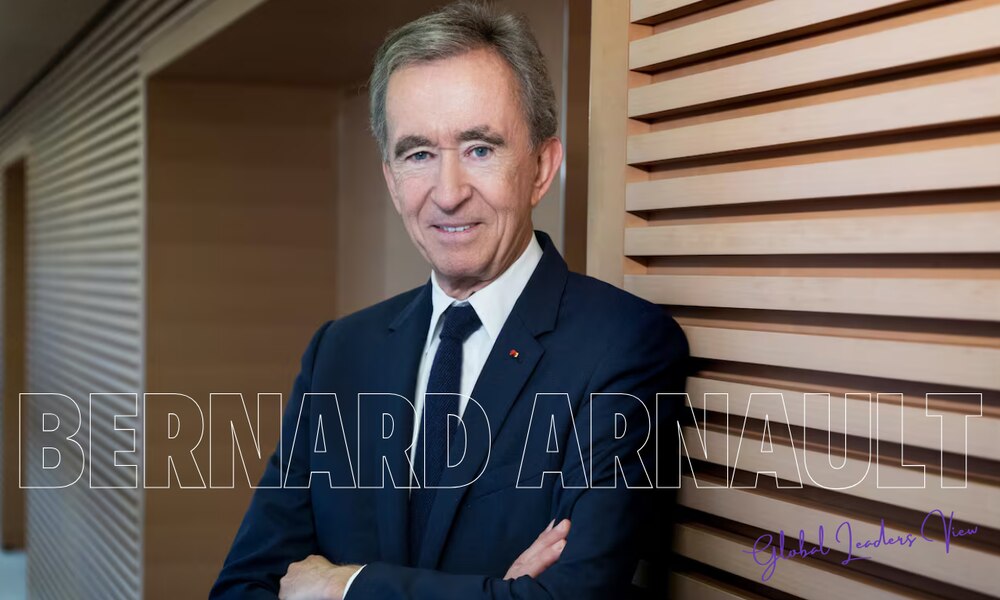
Bernard Arnault: Bio, History, and Business Path

Bernard Arnault is a name synonymous with luxury, power, and immense wealth. As the chairman and CEO of LVMH (Moët Hennessy Louis Vuitton), Bernard Arnault has built an empire that transcends industries, from fashion and retail to hospitality and fine wines. His incredible success story is a testament to visionary leadership, calculated risks, and an unparalleled understanding of the luxury market.

In this article, Global Leaders Views look into the biography, history, and the business path that led Bernard Arnault to become one of the richest men in the world.

Early Life and Education: The Foundation of Success

Born on March 5, 1949, in Roubaix, France, Bernard Arnault grew up in a family that had a strong presence in the construction industry. His father, Jean Arnault, was a manufacturer, and Bernard’s early exposure to business likely had a profound influence on his later career. He attended the prestigious École Polytechnique in Paris, one of France’s top engineering schools, where he earned a degree in civil engineering.

Although his education was in engineering, Arnault’s entrepreneurial spirit was ignited early on. After completing his studies, he joined his father’s construction company, Ferret-Savinel, and quickly rose through the ranks, showcasing his leadership and vision. However, it was not long before Arnault realized that his ambitions lay beyond the construction industry.

The Strategic Move to LVMH: A Masterstroke

In 1984, Bernard Arnault made a pivotal decision that would forever change the trajectory of his career. He acquired a controlling stake in LVMH, a luxury goods conglomerate, at a time when the company was struggling. LVMH was created through the merger of Moët Hennessy and Louis Vuitton in 1987, but it wasn’t the powerhouse brand we know today.

Arnault’s strategic vision and meticulous leadership were crucial in transforming LVMH into the global luxury giant it is today. He used his expertise in management and finance to streamline operations and expand the brand’s global reach. Under his stewardship, LVMH embarked on a series of high-profile acquisitions, which helped diversify its portfolio and solidify its dominance in the luxury sector.

Acquisitions That Defined Arnault’s Legacy

Arnault’s business strategy was centered around acquiring and nurturing world-renowned luxury brands. Through LVMH, he successfully acquired some of the most iconic names in fashion and beyond, including:

  • Christian Dior (1999): This acquisition brought one of the most prestigious names in fashion under LVMH’s umbrella, enhancing the conglomerate’s influence in the luxury fashion industry.
  • Fendi (2001): The acquisition of the Italian fashion brand Fendi further solidified Arnault’s position in the high-end fashion market.
  • Sephora (1997): This beauty retailer was a key addition to LVMH’s portfolio, creating synergies between fashion, beauty, and retail, and positioning LVMH as a leader across multiple sectors.
  • Tiffany & Co. (2020): The acquisition of this iconic American jewelry brand for $16 billion was a significant milestone in Arnault’s career, bolstering LVMH’s position as the undisputed leader in the luxury market.

Each acquisition was made with a clear strategy in mind: expanding LVMH’s portfolio while maintaining the individual brand identities and exclusivity that are essential to luxury. Arnault’s management style, which emphasizes both creativity and operational efficiency, has been key to LVMH’s continued success.

The LVMH Business Model: Innovation Meets Tradition

At the heart of LVMH’s success under Bernard Arnault is the business model that blends tradition with innovation. Arnault has always understood that luxury is not just about the products themselves but the experience and exclusivity that they represent. He has consistently nurtured the brands under the LVMH umbrella, giving them the freedom to innovate while preserving their unique identities.

This model has allowed LVMH to maintain a leadership position in the luxury market, even during economic downturns. The company’s focus on high-quality craftsmanship, innovation, and an unwavering commitment to exclusivity ensures that its brands remain desirable to the world’s wealthiest consumers.

In addition to the traditional luxury goods, Arnault has also expanded into other sectors, such as fine wines, spirits, and hospitality, allowing LVMH to diversify its income streams. Brands such as Moët & Chandon, Dom Pérignon, and Krug have played a pivotal role in LVMH’s financial success, further cementing Arnault’s reputation as a shrewd businessman with a keen eye for opportunity.

Bernard Arnault’s Wealth and Influence: A Global Powerhouse

As of recent years, Bernard Arnault consistently ranks among the wealthiest individuals in the world. His net worth fluctuates, often surpassing $200 billion, placing him at the top of global wealth rankings, alongside figures like Elon Musk and Jeff Bezos. Arnault’s immense fortune is not just a byproduct of his ownership of LVMH, but also his ability to adapt to market trends and maintain a long-term vision for his empire.

Beyond his business ventures, Arnault has also positioned himself as a key influencer in the global economy. His presence in the luxury sector has a ripple effect on fashion, retail, and even art, as he has been known to invest in contemporary artists and institutions. Through the Louis Vuitton Foundation, Arnault has demonstrated his commitment to supporting the arts, further elevating his stature in the global cultural and business landscape.

Philanthropy: Bernard Arnault’s Commitment to Giving Back

While Bernard Arnault is often perceived as a formidable business magnate, he has also been active in philanthropic efforts. He has made significant contributions to causes such as education, healthcare, and the arts. His charitable foundation, the Louis Vuitton Foundation, promotes contemporary art and supports emerging artists, contributing to cultural development worldwide.

Moreover, during the COVID-19 pandemic, LVMH stepped up by converting its perfume factories into hand sanitizer production facilities, showing Arnault’s ability to pivot in times of crisis while maintaining the company’s commitment to social responsibility.

The Legacy of Bernard Arnault: A Visionary Entrepreneur

Bernard Arnault’s rise to prominence is a story of visionary entrepreneurship. His relentless pursuit of excellence, coupled with a keen sense of market timing, has allowed him to build one of the most powerful conglomerates in the world. Arnault’s story demonstrates that with the right mix of creativity, strategy, and risk-taking, it is possible to reshape industries and create lasting value.

As LVMH continues to expand and innovate, Bernard Arnault’s legacy is poised to endure for generations. His influence on the luxury market, in particular, will remain a benchmark for future entrepreneurs who aspire to build global empires.

Global Leaders Views: A Testament to Business Acumen

Bernard Arnault’s biography is more than just the story of one man’s rise to immense wealth. It is a testament to the power of strategic thinking, relentless ambition, and the ability to adapt to changing markets. From his humble beginnings to becoming a global icon in the luxury industry, Arnault’s journey underscores the importance of vision and leadership in building a business empire.

With LVMH continuing to lead the charge in the luxury market, Bernard Arnault remains a defining figure in the world of business and beyond. His story is one that will inspire entrepreneurs for years to come, offering invaluable lessons in management, ininnovation and leadership.

Warren Buffett: His Path to Business Success

Warren Buffett, also known as the “Oracle of Omaha,” has become one of the most recognizable characters in the world of investment and business. His journey is not only a story of financial success, but also a lesson in strategy, patience, and the power of compounding growth. Buffett’s career, as one of the world’s wealthiest men, teaches entrepreneurs, investors, and business experts significant lessons.

In this Global Leaders Views, we will look at Warren Buffett’s basic ideas and how his business approach has affected the present financial landscape.

The Early Years: Laying the Foundation for Success

Warren Buffett’s journey into the business world began at an early age, growing up in Omaha, Nebraska. Buffett’s interest in finance sparked early when, at just 11 years old, he made his first investment in stock. This early start laid the foundation for his lifelong commitment to the world of business. His early investments, such as purchasing shares of a company called Cities Service, were small but demonstrated his ability to see potential even at a young age.

Buffett’s entrepreneurial spirit was evident even during his teenage years. He sold chewing gum, Coca-Cola, and even worked as a paperboy. These small ventures gave him an insight into the practical aspects of running a business and understanding consumer behavior. Buffett’s approach to business would evolve from these humble beginnings, incorporating both the lessons he learned in his early ventures and the deeper knowledge he acquired as he grew older.

Education and Mentorship: The Influence of Benjamin Graham

While Warren Buffett’s natural talent for business was evident from an early age, it was his education and mentorship that helped refine his approach to investing. After attending the University of Nebraska-Lincoln, Buffett went on to pursue a Master of Science in Economics from Columbia Business School. Here, he met Benjamin Graham, the father of value investing, who would profoundly impact Buffett’s investment philosophy.

Graham’s teachings, particularly his concept of “value investing,” were critical in shaping Buffett’s investment strategy. Graham emphasized buying undervalued stocks with strong fundamentals and holding them for the long term. This strategy resonated deeply with Buffett, who would later adopt it as the core principle of his investment approach. His focus on finding businesses with a durable competitive advantage, strong management, and a clear path to sustainable growth would become the hallmark of his investing style.

The Formation of Berkshire Hathaway: Building a Legacy

In the early 1960s, Buffett began to make a name for himself as a savvy investor. He took control of a struggling textile company called Berkshire Hathaway, which would eventually become his primary vehicle for wealth-building. While many saw the textile business as a dying industry, Buffett had a different vision. He began to gradually shift the focus of Berkshire Hathaway toward acquiring more promising businesses in other industries, from insurance to railroads to consumer goods.

By acquiring undervalued companies and restructuring them for long-term success, Buffett began to transform Berkshire Hathaway into one of the most successful and diversified holding companies in the world. The company’s stock price skyrocketed, and Buffett’s reputation as a visionary investor grew.

Berkshire Hathaway’s unique structure allowed Buffett to make strategic acquisitions without interference from external stakeholders. This “owner-operator” model gave him the flexibility to make long-term decisions without the pressures of quarterly earnings or short-term market fluctuations. It was this approach that enabled Buffett to focus on acquiring businesses that he believed would continue to thrive for decades, rather than chasing short-term profits.

Key Business Principles: What We Can Learn from Warren Buffett

Warren Buffett’s success in business is largely attributed to his adherence to a set of timeless principles. These principles have guided his investments and business decisions over the years, enabling him to amass significant wealth while maintaining a strong ethical foundation. Below are some of the key lessons we can learn from Warren Buffett’s approach to business:

1. The Power of Long-Term Thinking

One of the most important lessons we can learn from Warren Buffett is the importance of long-term thinking. Buffett’s ability to see beyond short-term fluctuations and focus on the long-term potential of a business has been key to his success. He has often said that his favorite holding period for an investment is “forever.” This philosophy encourages investors and business leaders to think beyond quarterly reports and immediate results, focusing instead on the long-term sustainability and growth of a company.

2. Invest in What You Understand

Warren Buffett famously advises investors to “never invest in a business you cannot understand.” This principle has been crucial in his investment decisions. Buffett’s success lies in his ability to only invest in businesses he understands thoroughly. By sticking to industries and companies where he has a deep knowledge base, Buffett has minimized risk and made more informed decisions.

This principle applies not just to investing, but also to entrepreneurship. Business owners should focus on industries or niches where they possess expertise or can develop a deep understanding of the market. This knowledge enables smarter decision-making and reduces the likelihood of failure.

3. Value Over Price

Warren Buffett is a firm believer in the concept of “value over price.” He emphasizes the importance of buying businesses that are undervalued, based on their fundamentals, rather than chasing stocks that are temporarily popular or trending. Buffett’s focus on intrinsic value means he looks for companies that have a strong competitive edge, capable management, and a predictable future growth trajectory.

For businesses, this translates into building products or services that provide real value to customers. Rather than focusing on short-term trends or gimmicks, companies should focus on delivering quality and building a strong reputation that will ensure long-term success.

4. The Importance of Trustworthy Leadership

Buffett places a high value on strong leadership. When acquiring companies, one of the key factors he looks for is trustworthy and capable management. He believes that a company’s success is heavily influenced by the people running it. Buffett’s management philosophy is simple: hire the best people, give them the resources they need to succeed, and trust them to make the right decisions.

This philosophy can be applied to any business, large or small. Leadership is one of the most crucial factors in determining a company’s success. Entrepreneurs and business owners should focus on building strong teams, providing clear guidance, and allowing leaders to operate with autonomy and trust.

5. Focus on Cash Flow, Not Profits

Buffett has often said that he prefers companies with strong and predictable cash flow over companies with high profits but unstable earnings. Cash flow is a key indicator of a business’s financial health because it shows whether a company is able to generate enough money to reinvest, pay off debt, and return value to shareholders. A company with solid cash flow is in a better position to weather economic downturns and continue growing over time.

For business owners, understanding cash flow is crucial to long-term survival. Regularly reviewing cash flow statements and ensuring that the business can generate consistent income will help sustain operations even in challenging times.

Legacy of Warren Buffett: An Icon of Business Wisdom

Warren Buffett’s journey in business is a testament to the power of discipline, strategic thinking, and the ability to adapt to changing markets. By focusing on long-term value, investing in what he understands, and placing trust in strong leadership, Buffett has built a legacy that continues to inspire generations of investors and entrepreneurs. His approach to business is not just about accumulating wealth, it’s about building enduring companies that can thrive for decades.

As we look to the future, Buffett’s principles remain more relevant than ever. Whether you’re an investor looking to build a diversified portfolio or a business owner striving to build a successful company, the lessons learned from Buffett’s career provide a roadmap for success. His journey shows that with patience, discipline, and a long-term vision, it’s possible to achieve unparalleled success in business.

Visit our Latest Interviews

Oliver Tambo: A Legacy of Leadership, Struggle and Triumph

Oliver Reginald Tambo remains one of South Africa’s most pivotal figures in the fight for freedom and justice. His life story is not just that of a political leader, but of a revolutionary who embodied the spirit of resilience, unity, and undying commitment to the cause of ending apartheid in South Africa. As an anti-apartheid revolutionary, he played an instrumental role in galvanizing the international community against the South African regime and provided an unwavering support base for the African National Congress (ANC) during its most trying times.

In this article, we learn the remarkable life of Oliver Tambo, shedding light on his early years, his journey into politics, his leadership within the ANC, and his significant contributions to both South African and global history.

Early Life and Education of Oliver Tambo

Born on October 27, 1917, in the village of Kronkop, in what is now known as the Eastern Cape, Oliver Tambo came from humble beginnings. His parents, Miriam Tambo and Kabelo Tambo, were both members of the Black community who faced the harshness of the apartheid system. His early years were shaped by an environment of racial segregation, and this would influence his later political decisions and his desire to fight for justice.

Tambo’s educational journey began at the St. Peter’s Secondary School in Johannesburg, where he excelled as a student. His brilliance in academics, especially in mathematics, would shape the future path of his life. Later, he moved to Fort Hare University, one of the most prestigious institutions for African education at the time. It was here that Tambo’s political awareness began to take shape.

At Fort Hare, Oliver Tambo met other future leaders, such as Nelson Mandela and Walter Sisulu. This marked the beginning of lifelong friendships and collaborations that would define much of the struggle against apartheid. After his studies, Tambo became involved in student activism, and it was during these years that he began to realize that education alone would not be enough to break the chains of oppression in South Africa.

Political Awakening and Early Activism

Oliver Tambo’s commitment to fighting apartheid began when he joined the African National Congress (ANC) in the late 1940s. His involvement in the ANC’s activities was fueled by his growing awareness of the need for collective action against the discriminatory policies of the South African government. He became closely associated with ANC leaders like Nelson Mandela, Walter Sisulu, and Albertina Sisulu, and together they formed a formidable leadership group.

In 1944, Tambo became one of the founding members of the ANC Youth League, a movement that aimed to invigorate the ANC with a new vision of radical change. It was during this period that the ANC adopted its Defiance Campaign, a response to the increasing racial laws imposed by the National Party government. As the secretary of the Youth League, Tambo helped bring fresh energy to the cause, and his passionate speeches and activism helped rally many people to join the struggle.

The establishment of the ANC Youth League helped lay the groundwork for the ANC’s most significant movements, and Tambo’s organizational and leadership skills shone through in these early years. His decision to prioritize youth engagement was not just about energizing a generation of South Africans, but also about ensuring the long-term survival of the ANC and the struggle for equality.

Exile and International Advocacy

In 1960, following the Sharpeville Massacre, the apartheid government banned the ANC, and its leaders were forced underground. Oliver Tambo, having become one of the ANC’s most vocal and effective leaders, was no exception. In 1962, he went into exile and continued his activism abroad. What followed was a period that saw Tambo becoming the ANC’s most significant international representative.

From his base in Lusaka, Zambia, Tambo dedicated himself to garnering international support for the anti-apartheid movement. He tirelessly traveled across the globe, speaking to world leaders, building alliances, and raising awareness about the injustices faced by the South African people. His diplomatic skills were instrumental in persuading countries to impose sanctions on South Africa and to sever ties with the apartheid regime.

Under Tambo’s leadership, the ANC succeeded in gaining formal recognition by many nations, and in 1973, the organization was granted full membership in the Organization of African Unity (OAU). This was a significant milestone, as it solidified the ANC’s position as the legitimate representative of the South African people in the international arena.

Perhaps one of Tambo’s most notable achievements during this period was his ability to keep the ANC united despite internal and external pressures. His diplomacy, coupled with his steadfast commitment to the ideals of democracy and freedom, ensured that the ANC remained focused on its core mission, despite the setbacks.

Leadership in the ANC and the Fight for Freedom

While in exile, Tambo continued to lead the ANC with unwavering dedication. He worked closely with his colleagues in the organization to coordinate military operations, provide support to anti-apartheid activists in South Africa, and maintain the ANC’s position as the leader of the struggle. Despite the distance from home, Tambo maintained close communication with Nelson Mandela and others incarcerated on Robben Island, continually advocating for their release and for the establishment of a democratic South Africa.

The ANC’s armed wing, Umkhonto we Sizwe (MK), which Tambo helped establish in 1961, carried out various operations against the apartheid regime. Although Tambo never physically participated in military actions, his leadership and direction were crucial in organizing and supporting these efforts.

Tambo’s leadership was defined by his focus on unity and non-racialism. He believed that the liberation of South Africa could only be achieved by fostering solidarity among the country’s diverse racial and ethnic groups. This vision of a non-racial South Africa was central to the ANC’s ideology and was one of the pillars upon which the post-apartheid government was founded.

Return to South Africa and the Legacy of Oliver Tambo

In 1990, following years of isolation, the ANC was unbanned, and Nelson Mandela was released from prison. This historic moment marked the beginning of the end of apartheid. Oliver Tambo, who had tirelessly worked for this day, returned to South Africa in 1991, where he was welcomed as a hero. Although his health was in decline, Tambo continued to contribute to the political process until his passing on April 24, 1993.

Tambo’s legacy lives on, not only in the history of the ANC but also in the post-apartheid South Africa that he helped build. His leadership, vision, and sacrifices laid the foundation for a democratic, inclusive, and non-racial South Africa. Today, he is remembered as one of the foremost architects of the country’s freedom, and his life continues to inspire people around the world who fight for justice, equality, and human rights.

Global Leaders Views

The Timeless Influence of Oliver Tambo

Oliver Tambo was more than just a political leader; he was a symbol of resistance, an embodiment of courage, and a champion of freedom. His life’s work remains a testament to the power of resilience in the face of adversity and the unyielding determination to achieve justice.

From his humble beginnings to his leadership role in the ANC, from his exile to his triumphant return, Oliver Tambo’s story is one of triumph against overwhelming odds. His impact on South Africa’s freedom struggle, and the global fight against apartheid, will never be forgotten.

For those looking to learn more about the life and legacy of Oliver Tambo, his leadership in exile, and the historical context of the South African liberation movement, we encourage further exploration of his journey, which continues to resonate as a beacon of hope and determination for future generations.

Visit: Latest Magazine

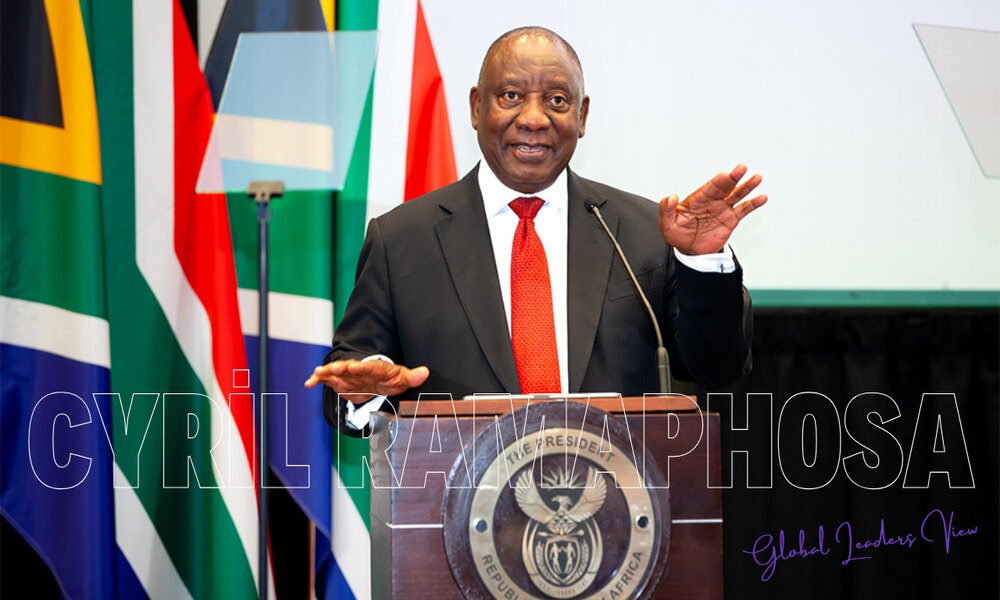
Cyril Ramaphosa: Birth, History and Political Journey

Cyril Ramaphosa, the current President of South Africa, has risen to prominence as a key figure in the political and economic landscape of the nation. His journey, from humble beginnings to the helm of a country transitioning from apartheid to democracy, is a testament to his resilience, leadership, and dedication to the future of South Africa.

This Global Leaders Views look into the life of Cyril Ramaphosa, exploring his early years, his remarkable achievements, and his impact on South Africa’s political, economic, and social landscape.

Early Life and Birth of Cyril Ramaphosa

Cyril Matamela Ramaphosa was born on November 17, 1952, in Soweto, a township in the southern part of Johannesburg, South Africa. As the son of a nurse and a teacher, Ramaphosa grew up in a working-class family, where he experienced firsthand the challenges of apartheid. His early life was shaped by the socio-political climate of South Africa, where systemic inequality and racial segregation were deeply entrenched in every aspect of life.

Ramaphosa’s formative years were marked by the Bantu Education Act, which imposed a substandard education system on black South Africans. Despite this, Ramaphosa excelled in his studies, showing a strong aptitude for leadership and academics. He attended Sekano-Ntoyi High School in Soweto, where his leadership qualities began to shine. His academic success opened doors for him to attend the University of the North, where he pursued a law degree, setting the stage for his future role in the political sphere.

Cyril Ramaphosa’s Early Career: From Activism to Leadership

Ramaphosa’s professional career began at the South African Congress of Trade Unions (SACTU), where he worked as a union organizer. This was a time of intense political unrest, as apartheid policies stifled the rights of black South Africans and fueled resistance movements. It was during this period that Ramaphosa became deeply involved in the African National Congress (ANC), the political party that would eventually lead the country’s fight against apartheid.

In 1982, Cyril Ramaphosa founded the National Union of Mineworkers (NUM), which would go on to become one of the most powerful labor unions in South Africa. Under his leadership, the NUM fought for better wages and working conditions for black mineworkers, challenging the deeply entrenched racial discrimination of the time. The union’s success not only elevated Ramaphosa’s standing within the ANC but also placed him at the forefront of the struggle for workers’ rights.

During the 1980s, the apartheid regime cracked down on anti-apartheid movements, and many leaders of the ANC were either imprisoned or forced into exile. Ramaphosa emerged as a prominent leader within the ANC’s ranks, despite being banned from public speaking. His role as a labor leader and his advocacy for the rights of black South Africans gained him widespread recognition and respect, both within the ANC and among the South African population at large.

Cyril Ramaphosa’s Role in the End of Apartheid

In the early 1990s, South Africa was at a crossroads. The apartheid regime, weakened by internal resistance and international pressure, began to negotiate with the ANC for the country’s transition to democracy. Ramaphosa was chosen as one of the key negotiators for the ANC during these talks. His ability to negotiate and find common ground between opposing parties was crucial in bringing about a peaceful transition.

In 1991, he became the ANC’s chief negotiator at the Convention for a Democratic South Africa (CODESA), where he worked tirelessly to secure a deal that would end apartheid and establish a democratic, multiracial government. His diplomatic skills and determination were essential in achieving the 1994 democratic elections, which saw Nelson Mandela elected as the first black president of South Africa.

Ramaphosa’s leadership during this transformative period in South Africa’s history earned him widespread acclaim. However, as the country entered its new phase of democracy, Ramaphosa chose to focus on business ventures, leveraging his political capital to become a key figure in South Africa’s growing economy.

Cyril Ramaphosa’s Business Success and Economic Influence

After the fall of apartheid, Cyril Ramaphosa’s talents extended beyond politics into the business world. In 1997, he founded Shanduka Group, a diversified investment holding company. Under Ramaphosa’s leadership, Shanduka Group grew into a significant player in various industries, including mining, real estate, and telecommunications. He also became involved in Mosaic Telecom, expanding his portfolio and establishing himself as one of the most influential business figures in South Africa.

Ramaphosa’s success in the business world did not go unnoticed. He became one of the wealthiest individuals in South Africa, with a fortune estimated at several billion dollars. His business acumen, combined with his deep understanding of South Africa’s socio-political landscape, positioned him as a key influencer in both economic and political spheres.

Despite his wealth and success, Ramaphosa’s focus remained on economic transformation, seeking to address the disparities that continued to plague South Africa’s black population. Through his business ventures, he advocated for greater black economic empowerment (BEE), a policy aimed at increasing the participation of black South Africans in the country’s economic activities.

Cyril Ramaphosa’s Rise to the Presidency

Cyril Ramaphosa’s return to the political spotlight came in 2012, when he was elected Deputy President of the ANC. His political career took a significant turn as he positioned himself as a candidate for the presidency of South Africa, particularly after the resignation of Jacob Zuma amid corruption scandals.

In 2017, Ramaphosa won the race to become the President of the ANC, defeating Nkosazana Dlamini-Zuma, the ex-wife of Jacob Zuma, in a contentious battle. His victory was seen as a triumph for the party’s reformist faction, which sought to distance itself from the scandal-ridden presidency of Jacob Zuma and restore the ANC’s reputation.

In February 2018, Ramaphosa became the President of South Africa after Jacob Zuma resigned following intense pressure from within his own party and from the public. Ramaphosa’s ascension to the presidency was met with optimism, as many believed he would bring much-needed change to South Africa, particularly in the areas of corruption, governance, and economic growth.

Challenges and Achievements as President

As president, Cyril Ramaphosa has faced a myriad of challenges, including high unemployment, economic stagnation, corruption scandals, and the aftermath of the COVID-19 pandemic. Despite these obstacles, Ramaphosa has made significant strides in trying to tackle these issues.

One of his first major accomplishments was his push for state-owned enterprise reform and anti-corruption measures. He established the Zondo Commission, an inquiry into state capture and corruption, which led to the exposure of widespread corruption within the government. Ramaphosa’s government has also sought to strengthen South Africa’s relations with international partners, aiming to attract foreign investment and bolster the country’s economic standing.

In terms of social reforms, Ramaphosa has been a proponent of land reform, focusing on redistributing land to black South Africans who were dispossessed under apartheid. His administration has made efforts to balance the need for economic stability with the demand for greater equality in land ownership.

Despite ongoing challenges, Ramaphosa’s leadership continues to be a beacon of hope for many South Africans, who view him as a figure who can guide the country towards a more inclusive and prosperous future.

Global Leaders Views: The Legacy of Cyril Ramaphosa

Cyril Ramaphosa’s journey from his early life in Soweto to his presidency of South Africa is a story of resilience, ambition, and dedication. From his work in the labor movement and the end of apartheid to his influential role in South Africa’s economic transformation, Ramaphosa has left an indelible mark on the nation’s history. As president, his leadership is shaping the future of South Africa, and his legacy will be defined by the changes he brings to the country in the years to come.

Visit: Latest Interview