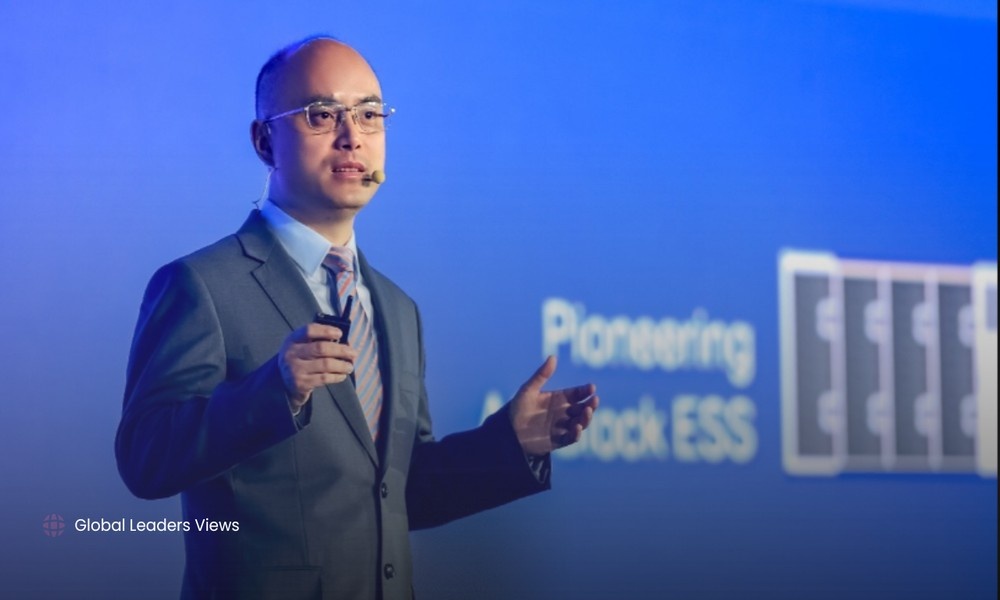
Sungrow, a pioneer in solar inverter technology, is taking decisive action to tackle new energy issues in a time when the use of renewable energy is expanding worldwide. The company is revolutionizing the way clean energy is incorporated into power systems across the globe with its most recent innovations on display at the Sungrow Global Renewable Energy Summit 2026. Sungrow is proving that sustainable energy solutions can be both creative and scalable with its state-of-the-art grid-forming inverters and growing U.S. manufacturing capabilities.
Sungrow’s Headquarters Leadership and Global Vision
Sungrow, which has its headquarters in Hefei, China, has gradually increased its global presence by fusing strategic international collaborations with top-notch research. Sungrow’s capacity to provide dependable renewable energy solutions in a variety of industries is demonstrated by its partnership with ENGIE, one of the top energy corporations in the world. The purpose of this collaboration is to implement high-performance solar and energy storage systems that support carbon neutrality objectives and adapt to changing grid demands.
Sungrow’s headquarters is still at the forefront of energy technology innovation, with a focus on sustainability, efficiency, and dependability. The company’s dedication to research and development keeps it at the forefront of the renewable energy industry and upholds its reputation as a reliable supplier of solar inverters and energy storage solutions.
Grid-Forming Inverters: Revolutionary
Grid-forming inverters, which stabilize and maximize the integration of renewable energy into contemporary grids, are at the core of Sungrow’s technological prowess. These devices may function independently of the grid, unlike conventional inverters, guaranteeing a steady power supply even in areas with varying energy availability. For large-scale solar and storage projects, where reliable energy supply is critical, this technology is extremely important.
Sungrow’s inverters increase overall energy efficiency and grid stability by utilizing sophisticated algorithms and real-time monitoring. The Sungrow datasheet, which offers engineers and project developers thorough insights into system performance and capabilities, contains detailed specifications.
Increasing Local Impact and U.S. Manufacturing
Sungrow’s global strategy has advanced significantly with its entry into the U.S. manufacturing industry. The company hopes to improve supply chain resilience, shorten lead times, and generate employment in renewable energy technology by setting up local production facilities. This program demonstrates Sungrow’s dedication to promoting energy independence while hastening the switch to renewable energy sources and is in line with the rising demand in North America for locally produced clean energy solutions.
Cutting-Edge Solutions and Sungrow 4800
Another example of the company’s technological innovation is the introduction of the Sungrow 4800 series. The 4800 series is designed to satisfy the needs of both residential and utility-scale applications and is engineered for dependability and efficiency. It is a top option for contemporary energy planners looking for stable, high-performance solutions because of its clever monitoring capabilities and smooth interaction with energy storage systems.
Prospects for the Future and Industry Leadership
In the future, Sungrow’s involvement in the Sungrow Global Renewable Energy Summit 2026 highlights its leadership in influencing the field of renewable energy. The organization is well-positioned to address new energy concerns by combining local production, technological innovation, and global strategy. Sungrow’s strategy demonstrates that innovation in renewable energy encompasses not just new items but also sustainable, scalable, and significant solutions for communities throughout the globe.
Sungrow’s emphasis on innovation goes beyond technology to promote energy ecosystem sustainability. Sungrow guarantees that renewable energy assets run at maximum efficiency while lowering operating costs by combining smart monitoring, predictive maintenance, and energy storage optimization. Additionally, the organization places a strong emphasis on training and development, enabling engineers and professionals around the world to successfully apply cutting-edge energy solutions. Sungrow is making a real difference in the environment and society through programs including large-scale utility partnerships and community solar projects. These initiatives demonstrate how innovation in renewable energy can spur economic expansion, energy security, and a better planet for coming generations.
The African Safari experience has achieved popularity because to the rising demand for immersive travel, as tourists look for more intimate relationships with the natural world and wildlife. Experts in the field point out that as more tourists discover Africa’s varied ecosystems, adequate planning is becoming crucial. Safari travel offers unparalleled experience in both deep jungles and savannah vistas, but it necessitates proper preparation.
Travel advisors note that understanding the destination is the first step in preparing for an African Safari. Each region, whether Kenya, Tanzania, or South Africa, provides a unique experience shaped by climate, wildlife patterns, and local regulations. Choosing the right time to visit plays a key role, as wildlife visibility often depends on seasonal migrations and weather conditions.
Travel specialists also highlight the importance of strategic packing. Lightweight clothing in neutral colors, comfortable footwear, and sun protection are all considered necessary. Experts also advise packing binoculars, cameras, and all necessary travel paperwork to guarantee a seamless trip. Preparation goes beyond packing and includes health precautions like immunizations and travel insurance.
Planning and Safety Shape the Modern African Safari
Safety and awareness have become more vital aspects of the African Safari experience, particularly for first-time visitors. Tour providers emphasize the necessity of booking with reliable safari companies that focus skilled guides and safe lodging. Guided excursions not only improve wildlife encounters, but they also ensure compliance with conservation regulations and safety precautions.
Budget preparation also came to light as an important issue in determining safari experiences. African safari vacations vary greatly in price depending on lodging, duration, and exclusivity. Luxury lodges, mid-range camps, and budget safaris offer options for a variety of guests, making the experience more affordable while retaining quality.
Technology is now playing an important part in safari planning. Travelers are increasingly reliant on digital tools for itinerary planning, weather tracking, and reservation administration. At the same time, experts recommend abstaining from continual internet use while on safari in order to truly engage with the natural environment and wildlife.
Leadership Lessons and Strategic Planning Drive the Rise of African Safari Experiences
Executives and businesspeople are choosing the African safari not only for wildlife experiences but also for perspective. The wide landscapes, unstable surroundings, and raw natural systems reflect many real-world business difficulties. Leaders frequently compare following wildlife to navigating competitive markets, where patience, observation, and timing are essential for success.
Preparing for such an experience requires a strategic approach. Choosing the right destination—whether it’s Kenya’s Maasai Mara or South Africa’s Kruger National Park requires research and goal alignment, similar to company development planning. Before embarking on a safari trip, leaders should consider their travel objectives, such as relaxation, inspiration, or team-building.
Risk management is another critical takeaway. Just as safari guides assess terrain and animal movement to ensure safety, business leaders must analyze risks before making decisions. The unpredictability of the wild reinforces the need for flexibility and preparedness, qualities essential for navigating today’s fast-changing business environment.
The importance of guidance and expertise is also emphasized throughout the safari experience. Professional guides play a role similar to mentors or consultants in business, offering knowledge, direction, and situational awareness.
Strategic Thinking and Leadership Insights from the African Safari
Experts emphasize that the African Safari teaches valuable lessons about leadership and adaptability. Observing wildlife behavior in their natural surroundings teaches us about teamwork, survival, and hierarchy. For example, predators’ coordinated hunting techniques and herds’ protective instincts demonstrate the value of collaboration and leadership responsibility in companies.
As global leaders views, the African Safari remains a transformative adventure. Travelers may assure a safe and memorable trip by planning ahead of time, making educated decisions, and respecting the environment. According to industry observers, as knowledge rises, demand for well-prepared and responsible safari travel will increase.
In a world standing at the edge of environmental urgency, climate leadership is no longer optional, it is essential. Among the most influential voices redefining sustainability in 2026, “Karimah Hudda” emerges as a powerful, grounded, and visionary leader. Her journey is not just about environmental progress but about reimagining systems, empowering communities and building a future where people and the planet thrive together.
At Global Leaders Views, we are proud to recognize Karimah Hudda, Founder and Chief Catalyst at illumine.earthas one of the “Top 10 Climate & Sustainability Leaders Changing the World in 2026.” Her work reflects a rare blend of intellectual depth, emotional intelligence, and bold execution, making her a true architect of global transformation.
From Small-Town Roots to Global Impact
Karimah Hudda’s story begins in small-town India, but her vision quickly expanded far beyond borders. Having lived and worked across nearly 50 countries, she developed a unique perspective, one that understands the deep interconnection between climate, inequality, livelihoods, and human dignity.
Rather than viewing sustainability as a siloed issue, she recognized early on that real change requires addressing systems holistically. This mindset became the foundation of her career, shaping her work across international development, business strategy, and global sustainability initiatives.
The Foundation: Fairtrade and Global Development
One of the most defining phases of her career was her work within the Fairtrade movement. Here, she learned that sustainability is not just about environmental outcomes; it is equally about justice, equity, and economic empowerment.
Her contributions helped build a coalition of 280,000 farmers and workers across Asia, transforming them from passive participants into active co-owners of the system. This was not just a milestone; it was a structural shift in power, demonstrating how inclusive systems can drive meaningful, lasting change.
This moment redefined her approach: sustainability must always include those closest to the problem as part of the solution.
Leading Sustainability in Global Corporations
Karimah’s leadership journey also took her into some of the world’s largest organizations, including Mondelez and Nike, where she led sustainability efforts across business units, procurement, and global supply chains.
These experiences gave her a rare inside view of how complex systems actually function and more importantly, how they can be transformed.
She discovered the following:
Sustainability must be embedded into business strategy, not treated as an add-on
Decision-making power and capital allocation define real impact
Systems change requires alignment across departments and stakeholders
Her corporate experience strengthened her belief that true climate leadership must operate at the intersection of business, strategy, and purpose.
Illumine.earth: Redefining Climate Leadership
Driven by the need for a new kind of leadership, Karimah founded illumine.earth, a company focused on leadership, strategy, and systems transformation.
The mission is clear: To help visionary leaders accelerate a flourishing future for people and the planet—before it’s too late.
Through illumine.earth, she introduces a powerful framework based on three core pillars:
Personal Leadership – Building an inner compass and resilience
Enterprise Leadership – Influencing organizations from within
Industry Leadership – Driving collaboration and systemic change
This model reflects her belief that impact happens when leaders align inner clarity with external influence.
Defining Effective Climate Leadership in 2026
According to Karimah Hudda, effective leadership in today’s climate landscape begins with a strong inner compass.
Leaders today face immense pressure balancing urgency, politics, stakeholder expectations, and emotional fatigue. Without clarity, they risk losing direction.
But leadership does not stop there.
She emphasizes that modern climate leaders must
Think like CEOs, even without the title
Understand how power flows within organizations
Build strategies that are irresistible, not just idealistic
Collaborate across industries to scale impact
True leadership exists at three levels simultaneously: personal, enterprise, and industry.
Systems Thinking: The Key to Sustainable Change
Karimah’s approach is deeply rooted in systems thinking. She does not chase activity—she focuses on leverage.
Instead of asking, “What can we do?”, She asks:
Where is the point of maximum influence?
What decision could unlock multiple outcomes at once?
How can one action create ripple effects across systems?
This mindset ensures that her initiatives deliver scale, speed, and sustainability—not just symbolic progress.
A Landmark Achievement: Global Forest Watch Pro
One of her most impactful contributions was her role in building a coalition that led to the creation of Global Forest Watch Pro.
By initiating a coalition of companies, partners, and data systems, she helped create a shared monitoring platform for the global palm oil supply chain.
The result?
A unified system mapping global supply chains
Improved transparency and accountability
A significant reduction in deforestation linked to monitored supply chains (for a period)
This initiative proved that data, collaboration, and shared responsibility can transform entire industries.
Balancing Science, Innovation, and Real-World Impact
With a background in both microbiology and social sciences, Karimah brings a rare ability to bridge technical rigor with human reality.
She believes that:
Science provides clarity and direction
Innovation brings new possibilities
Real-world engagement ensures practical success
Her approach often involves taking teams out of boardrooms and into fields, farms, and communities, ensuring solutions are grounded in reality.
Because in her words, “A solution is only as strong as its ability to work in the real world.”
The Power of Collaboration and Collective Leadership
Karimah strongly advocates for collective leadership. She believes that no single organization or leader can solve climate challenges alone.
Her work focuses on:
Building coalitions across industries
Creating high-trust leadership spaces
Empowering stakeholders at every level
Through the illumine.earth ecosystem, she is fostering a new kind of leadership network, one that behaves like a living ecosystem built on mutual support, resilience, and shared purpose.
Empowering the Next Generation of Climate Leaders
Karimah Hudda’s leadership extends beyond systems; it reaches people, especially the next generation of climate leaders. She recognizes that Gen Z is inheriting a world shaped by decisions they did not make, yet they carry the responsibility to fix it.
Her approach is not hierarchical; it is collaborative and generative.
She:
Mentors emerging leaders
Learns from their perspectives
Encourages courage, integrity, and innovation
Leadership, in her view, is a shared journey, not a top-down structure
Resilience, Purpose, and the Drive to Continue
In a field filled with challenges and slow progress, what keeps Karimah going?
The answer lies in purpose.
She believes deeply in the possibility of a flourishing future, where humanity and nature exist in harmony.
Her resilience comes from:
A strong sense of mission
A commitment to meaningful change
An lineage of ancestors committed to social justice
She does not just endure the journey – she leads it with intention and hope.
Women in Climate Leadership: Strength with Sensitivity
As a woman leader, Karimah Hudda brings a distinctive combination of strength, empathy, and strategic clarity.
Her leadership reflects the following:
Emotional intelligence in high-pressure environments
Inclusivity in decision-making
A deep commitment to equity and fairness
She represents a growing wave of women who are not just participating in climate leadership but redefining it entirely.
At Global Leaders Views, wecelebrate her as a symbol of what modern leadership truly looks like: balanced, bold, and deeply human.
Trends Shaping Climate Leadership in 2026 and Beyond
Looking ahead, Karimah identifies key shifts that will define the future:
Leaders operating across personal, enterprise, and industry levels
Increased demand for high-trust, confidential collaboration spaces
Faster, more agile approaches to complex challenges
Greater integration of equity, inclusion, and sustainability
She believes that pace and complexity are not fixed; they can be redesigned.
Advice for Aspiring Sustainability Leaders
For those entering the field, her advice is both simple and profound:
Build your inner compass
Learn how systems and organizations work
Collaborate, don’t isolate
Stay grounded in purpose
Impact comes when clarity, courage, and collaboration meet.
A Legacy in the Making
Karimah Hudda is more than a sustainability leader; she is a systems thinker, a coalition builder, and a catalyst for change.
Her work proves that solving climate challenges requires more than innovation; it requires courage, collaboration, and a deep commitment to humanity.
As the world navigates one of its most critical decades, leaders like Karimah offer not just solutions, but hope.
And in that hope lies the power to transform the world.
A Message from Global Leaders Views
Karimah Hudda, your journey is not just inspiring; it is transformational. You represent a new era of leadership where intellect meets empathy and strategy meets purpose.
Your work reminds us that
“True leadership is not about managing the future; it is about courageously shaping it.”
We are proud to showcase you in our esteemed 2026 edition of Top 10 Climate & Sustainability Leaders Changing the World. We wish you continued strength, clarity, and impact as you lead the world toward a more sustainable and flourishing future.
Climate leadership has shifted from making meaningless promises to taking concrete, quantifiable action in the rapidly changing global economy of today. Businesses are now evaluated based on how ethically they operate throughout their whole value chain rather than just their earnings. Travis Miller, a leader who has changed how businesses approach sustainability at scale, sits at the center of this change.
Recognized among the “Top 10 Climate & Sustainability Leaders Changing the World in 2026”, Travis Miller represents a new wave of leadership that focuses on execution, accountability, and long-term systems. His work is not about temporary solutions. It is about building strong, repeatable frameworks that allow organizations to deliver meaningful environmental and social impact.
This feature explores his journey, leadership mindset, and the powerful systems he has developed to help global businesses operate more responsibly and transparently.
A Purpose-Driven Journey Across Disciplines
Travis Miller’s professional journey is rooted in a unique combination of law, science, international trade, and business operations. Over time, he began to see a pattern that many overlooked. The world’s most pressing environmental and social challenges were not always visible on the surface. They were deeply embedded within global supply chains.
This realization shaped the direction of his career. Instead of approaching sustainability as a separate function, he focused on supply chain compliance and corporate responsibility, where real impact could be achieved across industries and geographies.
His work has consistently revolved around transforming complex regulatory frameworks into practical, operational systems. What makes his journey remarkable is the clarity of purpose behind it. He has always believed that sustainability must be integrated into everyday business processes rather than treated as an external obligation.
Turning Knowledge into Practical Impact
One of the most defining aspects of Travis Miller’s work is his ability to translate theory into action. Through his publications, including Guide to Supply Chain Compliance Laws and Regulations and The Lawyer’s Corporate Social Responsibility Deskbook, he has provided organizations with a clear path forward.
These works are not abstract or overly technical. They are designed to help businesses understand how to implement compliance and sustainability in a structured way. They bridge the gap between policy and execution, enabling companies to move from understanding requirements to actually applying them.
This ability to simplify complexity has positioned Travis as a trusted voice in the field. His work supports organizations in building systems that are not only compliant but also efficient and scalable.
What Effective Sustainability Leadership Looks Like Today
For Travis Miller, leadership in sustainability is defined by one critical factor: the ability to deliver results. Setting ambitious goals is important, but without execution, those goals remain statements rather than achievements.
He believes that effective leaders should align teams across various functions, ensuring that sustainability extends beyond a single department. Across legal, procurement, engineering, and executive leadership, it becomes integral to decision-making.
Another important element is honesty. Sustainability involves complex challenges and difficult trade-offs. Leaders must be transparent about these realities while continuing to move forward. This approach builds trust and ensures that progress is both credible and measurable.
A Defining Realization: The Power of Supply Chains
A turning point in Travis Miller’s career came when he recognized that supply chain compliance is central to sustainability. Global supply chains are vast networks that influence everything from environmental impact to labor conditions.
Without proper systems, these networks can become sources of risk and inefficiency. Travis focused on creating frameworks that bring visibility and accountability into these systems. His work has helped organizations understand where risks exist and how to address them effectively.
This shift from reactive responses to proactive management has transformed how companies approach sustainability. It has also demonstrated that meaningful change often begins deep within operational systems.
Building Systems That Create Lasting Change
Rather than relying on one-time initiatives, Travis Miller emphasizes the importance of building long-term systems. Sustainable change does not happen through isolated actions. It requires consistent processes that can be repeated and improved over time.
His approach involves developing structured systems that allow organizations to track performance, engage suppliers, and respond to challenges in a timely manner. These systems create a foundation for continuous improvement, making sustainability a natural part of business operations.
What sets his work apart is the focus on practicality. Every system is designed to be usable, scalable, and aligned with real-world business needs.
How Strategic Prioritization Drives Impact
When dealing with complex climate challenges, choosing where to focus becomes critical. Travis Miller approaches this challenge with a clear framework that considers the importance, urgency, and scalability of each initiative.
He concentrates on areas where environmental impact, regulatory requirements, and business relevance intersect. This ensures that efforts are not only meaningful but also actionable.
Measurement plays a central role in this process. Instead of focusing on activity, he looks at outcomes. Improvements in data quality, stronger supplier engagement, and reduced risks are the indicators that truly matter.
Balancing Innovation with Real-World Execution
Innovation is often considered the key to solving sustainability challenges. However, Travis Miller emphasizes that innovation alone is not enough. Without proper implementation, even the most advanced ideas fail to create impact.
His approach balances scientific understanding with practical application. He ensures that solutions are grounded in reality and can be integrated into existing business systems.
This balance allows organizations to adopt new methods without disrupting their operations. It also ensures that progress is steady and sustainable over time.
The Role of Collaboration in Driving Change
You cannot solve sustainability challenges in isolation. Travis Miller strongly believes in the power of collaboration. His work involves engaging with a wide range of stakeholders, including suppliers, customers, regulators, and industry groups.
The goal is to create alignment and reduce barriers to participation. By simplifying processes and improving communication, he makes it easier for different stakeholders to work together.
This collaborative approach increases efficiency and amplifies impact. When multiple organizations move in the same direction, the results become far more significant.
Achieving Measurable Outcomes Across Industries
One of the most impactful aspects of Travis Miller’s work has been the implementation of supply chain programs across global manufacturers. These initiatives have led to significant improvements in visibility, data accuracy, and overall risk management.
Organizations that have adopted these systems are better equipped to identify potential issues and take corrective action. This proactive approach reduces environmental impact and strengthens compliance with regulations.
The results demonstrate that sustainability is most effective when it is supported by strong systems and clear processes.
Using Technology and Data to Strengthen Sustainability
Technology and data have become essential tools in modern sustainability efforts. Travis Miller focuses on creating systems that use structured data to support decision-making.
He ensures that these systems remain accessible and practical, avoiding unnecessary complexity. This is particularly important for smaller organizations that may not have extensive resources.
By making solutions inclusive, he helps ensure that more organizations can participate in sustainability initiatives. This broad participation is key to achieving meaningful global impact.
Challenges in Modern Climate Leadership
Despite progress, sustainability leaders continue to face significant challenges. Regulations are evolving rapidly, and organizations must constantly adapt to stay compliant.
At the same time, expectations from stakeholders are increasing. There is a growing demand for transparency and proof of impact. Companies are expected to demonstrate real results rather than simply making commitments.
Travis Miller addresses these challenges by focusing on strong systems and reliable data. This approach builds credibility and ensures that organizations can respond effectively to change.
Empowering Future Leaders in Sustainability
A key part of Travis Miller’s work involves preparing the next generation of leaders. He believes that sustainability requires a profound understanding of how different disciplines connect.
By involving teams in both strategy and execution, he helps them develop practical skills and confidence. This hands-on approach encourages innovation and ownership.
He also emphasizes the importance of thinking across boundaries. Future leaders must understand how sustainability connects with law, business operations, and global trade.
Staying Motivated in a Long-Term Journey
Sustainability is a long-term effort, and progress can sometimes be slow. What keeps Travis Miller motivated is the tangible impact of his work. Improvements in supply chain systems lead to better environmental outcomes and stronger accountability.
The growing commitment from organizations worldwide also motivates him. Sustainability is no longer considered optional. It has become a central part of business strategy.
This shift provides momentum and reinforces the importance of continued effort.
Aligning Environmental, Social, and Economic Goals
One of the most important aspects of sustainability is balance. Travis Miller focuses on integrating environmental, social, and economic objectives into a single framework.
By embedding sustainability into core processes such as sourcing and risk management, organizations can create value across all three areas. This integrated approach ensures that sustainability efforts are both effective and sustainable over time.
Future Trends Shaping Sustainability Leadership
Looking ahead to 2026 and beyond, several trends are expected to redefine sustainability. Organizations will require greater visibility into their supply chains and more accurate data to support decision-making.
There will also be a stronger connection between sustainability and global trade, making compliance even more important. Companies that can adapt to these changes will be better positioned for long-term success.
Travis Miller’s work aligns with these trends, making his approach relevant for the future.
Advice for Emerging Professionals and Organizations
For those looking to make an impact in sustainability, Travis Miller emphasizes the importance of building practical expertise. Understanding how systems work is just as important as having a clear strategy.
Organizations should focus on developing strong data and governance frameworks. Progress comes from consistent improvement rather than waiting for perfect solutions.
This mindset allows both individuals and organizations to move forward with confidence.
Turning Ambition into Action
Travis Miller’s journey highlights what true climate leadership looks like in today’s world. It is not defined by bold statements alone but by the ability to turn ambition into action.
Through his work, he has shown that sustainability becomes effective when it is integrated into the core of business operations. By building systems that are practical, scalable, and transparent, he has helped organizations achieve real and measurable impact.
As the global business landscape continues to evolve, leaders like Travis Miller are setting the standard for what responsible leadership should look like. His approach serves as a powerful reminder that consistent effort, clear systems, and a commitment to doing better every day build lasting change.
The world is at a critical turning point where climate leadership and sustainability are no longer optional; they are essential. As industries, governments, and communities confront escalating environmental challenges, leaders who can translate vision into action are shaping the future. Among them, “Brandon Tan” stands out as a forward-thinking professional redefining how organizations approach sustainability with clarity, accountability, and measurable results.
Recognized under the Global Leaders Views magazine special edition, “Top 10 Climate & Sustainability Leaders Changing the World in 2026,” Brandon represents a new generation of leaders who blend innovation, science, and real-world application. His journey is not just about environmental responsibility; it is about creating lasting impact through collaboration, data-driven decisions, and purpose-driven leadership.
From Corporate Impact to Climate Commitment
Brandon Tan’s professional journey reflects a thoughtful evolution from global corporate influence to meaningful environmental impact. Earlier in his career, he worked at LinkedIn, contributing to initiatives that created equal opportunities for the global workforce through talent and learning solutions.
While this role offered scale and influence, Brandon felt a deeper calling. He sought work that directly addressed global challenges and created tangible, lasting change. That opportunity arrived when he joined ACT Group nearly three years ago.
Since then, his journey has been both refreshing and rewarding, driven by a mission to protect communities, restore ecosystems, and advance innovation in sustainability. His transition highlights an important shift many professionals are making today moving from impact at scale to impact with purpose.
Defining Effective Leadership in Climate and Sustainability
In today’s complex world, leadership in climate action requires more than ambition. According to Brandon, effective leadership means moving beyond vision to execution.
He emphasizes that strong leaders must align their ideas with measurable outcomes. This involves making difficult decisions, balancing competing priorities, and bringing diverse stakeholders together under a shared goal.
What sets impactful leaders apart is their ability to translate complex climate science into actionable strategies. This requires both technical understanding and the ability to communicate clearly across industries.
Ultimately, leadership is defined not by intention but by driving real, measurable change that creates value while inspiring others to contribute to the global sustainability transition.
Prioritizing Climate Initiatives for Real Impact
One of the major challenges in sustainability is deciding where to focus efforts. With limited resources and urgent timelines, prioritization becomes critical.
Brandon approaches the problem with a simple yet powerful framework: identifying areas where the greatest environmental impact can be achieved with available resources, supported by strong evidence.
Brandon prioritizes initiatives that can yield measurable outcomes, including carbon reduction, resource conservation, and community support. This data-driven approach ensures that efforts are not just symbolic but measurable and accountable.
By balancing short-term wins with long-term transformation, Brandon ensures that organizations maintain momentum while building towards systemic, lasting change.
Balancing Innovation, Science, and Practical Implementation
Sustainability solutions must work not only in theory but also in practice. Brandon believes that true progress comes from balancing innovation with real-world feasibility.
Science lays the groundwork by defining what is achievable, while innovation expands the limits. However, implementation determines whether those ideas can succeed in real environments.
To achieve this balance, Brandon emphasizes testing ideas through pilot programs, validating them with data, and refining them based on operational realities. Collaboration between technical experts and stakeholders ensures that solutions are both effective and adaptable.
This approach leads to scalable sustainability solutions that can be implemented across industries and geographies, delivering consistent and reliable outcomes.
The Power of Collaboration in Climate Action
No single organization can solve the climate crisis alone. Collaboration is at the heart of meaningful progress, and Brandon places significant emphasis on building strong partnerships.
He works closely with government agencies, industry groups, and organizations to develop transparent and credible environmental practices. By aligning incentives and fostering trust, he helps create systems where sustainability becomes a shared responsibility.
His work also involves shaping engagement strategies across global supply chains and responsible sourcing initiatives. These efforts ensure that sustainability extends beyond individual organizations and encompasses entire ecosystems.
Through collaboration, Brandon demonstrates how collective action can amplify impact and accelerate global climate solutions.
Overcoming Challenges in Climate Leadership
Despite growing awareness, significant challenges remain in driving climate action. One of the most pressing issues is aligning short-term economic priorities with long-term sustainability goals.
In regions like APAC, varying levels of ESG maturity and competing incentives can slow progress. Organizations often struggle to prioritize sustainability when immediate financial benefits are not clear.
Brandon highlights that overcoming these challenges requires clear communication and strong evidence. Leaders must demonstrate how sustainability initiatives can deliver both environmental and economic value.
Bridging this gap is essential to ensure that sustainability is not seen as a cost but as a strategic investment in the future.
Empowering the Next Generation of Climate Leaders
The future of sustainability depends on the next generation of leaders. Brandon believes that empowerment begins with creating a culture of ownership and purpose.
He encourages his teams to think critically, challenge assumptions, and take initiative. Providing mentorship and access to knowledge is important, but equally crucial is giving individuals the autonomy to experiment and learn.
By fostering both technical skills and a sense of responsibility, Brandon helps develop leaders who are not only capable but also deeply committed to sustainability.
When individuals see the real-world impact of their work, engagement increases, leading to stronger, more effective climate leadership across organizations.
Staying Motivated in a Long-Term Journey
Sustainability is a long-term commitment, often marked by slow progress and unexpected setbacks. Staying motivated in such an environment requires resilience and a clear sense of purpose.
For Brandon, motivation comes from understanding that every step contributes to a larger transformation. Progress may not always be linear, but each effort adds value to the broader mission.
He also draws strength from collaboration and shared purpose. Collaborating with equally dedicated individuals generates momentum and underscores the significance of the work.
Most importantly, witnessing the tangible benefits of sustainability initiatives across clients and communities serves as a constant reminder of the real impact we are making.
Key Trends Shaping Climate Leadership in 2026
Looking ahead, Brandon identifies a significant shift in the sustainability landscape—from ambition to accountability.
Organizations are no longer satisfied with simply measuring their environmental impact. Now, they concentrate on enhancing results and showcasing tangible business value.
Organizations are increasingly linking sustainability to operational efficiency, supply chain resilience, and long-term performance. Companies that fail to articulate the value of their sustainability efforts risk becoming irrelevant.
This shift marks a new era where climate leadership is defined not just by commitments but by results and measurable contributions to both environmental and business goals.
Advice for Emerging Professionals and Organizations
For those looking to make a meaningful impact in sustainability, Brandon offers practical and grounded advice.
He emphasizes that success is not about rapid transformation but about consistent, incremental progress. Starting with a strong understanding of both science and systems is essential.
Focusing on areas where tangible impact can be achieved helps build momentum. Collaboration remains a key factor, as no single entity can address global challenges alone.
Adaptability is also crucial, given the evolving nature of sustainability. By using data to guide decisions and maintaining a long-term perspective, professionals and organizations can create lasting and meaningful change.
Building a Future Where Sustainability Drives Value
The role of sustainability in business is evolving rapidly. It is no longer a separate initiative but an integral part of strategy and performance.
Brandon’s approach highlights the importance of integrating sustainability into core operations, ensuring that it strengthens resilience and creates durable competitive advantage while aligning growth with stakeholder expectations and long-term enterprise performance.
This alignment creates a powerful synergy where businesses can grow while also contributing to global climate goals. It represents a shift towards a future where the most forward-looking organizations understand a simple truth; sustainable business is smart business.
Leading with Impact, Purpose, and Accountability
Brandon Tan’s journey and insights reflect the qualities needed to lead in today’s climate landscape. His focus on measurable impact, collaboration, and innovation sets a strong example for organizations and professionals alike.
As the world moves toward greater accountability in sustainability, leaders like Brandon are showing that real change is possible when vision is combined with action.
The future of climate leadership lies in creating solutions that are scalable, equitable, and impactful, ensuring that progress benefits both people and the planet.
In a world that demands urgent action, Brandon Tan reminds us that meaningful change begins with purpose, persistence, and the courage to lead differently.
We are truly honored to feature Dr. Sheila Nguyen as one of the distinguished leaders in our exclusive list of “Top 10 Climate & Sustainability Leaders Changing the World in 2026.” This recognition is not only a celebration of her remarkable 25+ year journey but also a tribute to her unwavering commitment to creating meaningful, lasting impact in sustainability and climate leadership.
Her work reflects a rare combination of deep insight, human-centered leadership, and global influence, making her a powerful force in shaping a more responsible and resilient future. We extend our heartfelt congratulations and wish her continued success as she inspires individuals, organizations, and communities worldwide.
A Journey Rooted in Purpose and Global Perspective
Dr. Sheila Nguyen’s professional journey is a testament to diverse experience and purposeful evolution. Over more than two decades, she has contributed across research institutions, universities, corporate consulting, and nonprofit initiatives, including co-founding a charity.
What truly defines her journey is not just the breadth of her work but the human impact at its core. Her inspiration stems from witnessing people make better decisions, align their expertise with purpose, and contribute to community well-being. This passion has shaped her approach to sustainability as not just a field of work, but a mission to elevate human potential and collective responsibility.
Redefining Leadership in the Era of Climate Challenges
Dr. Nguyen presents a compelling definition of meaningful leadership in today’s quickly changing global environment: service leadership. According to her, leadership is about acting in a way that demonstrates accountability, concern, and purpose rather than having power.
We see her leadership philosophy grounded in the belief that true impact comes from empowering others, whether formally leading teams or influencing broader ecosystems. Her approach demonstrates that sustainability leadership is deeply interconnected with humanity, ethics, and long-term vision.
Early Life Lessons Shaping a Sustainable Mindset
One of the most profound influences on Dr. Nguyen’s perspective comes from her upbringing as the child of Vietnamese refugees. These early life experiences instilled values such as the following:
Gratitude and humility
Understanding the difference between needs and wants
Giving more than taking
These principles continue to shape her approach to sustainability, where she sees transformation as an alignment with our most humane selves. Her philosophy emphasizes that sustainability is not just technical; it is deeply personal and ethical.
Strategic Decision-Making for Measurable Climate Impact
Climate action demands both urgency and clarity. Dr. Nguyen approaches this challenge through a structured and thoughtful prioritization framework, focusing on three essential questions:
1. Is the initiative materially relevant to the organization or ecosystem?
2. Will it create a meaningful and measurable difference?
3. Does it justify the opportunity cost, or will it distract from greater impact?
This strategic mindset ensures that sustainability efforts are not just well-intentioned but focused, effective, and outcome-driven. She continuously evaluates impact to ensure that resources are directed toward initiatives that truly matter.
Blending Science, Innovation, and Real-World Solutions
Dr. Nguyen emphasizes the importance of science-based targets and global frameworks as foundational guardrails in sustainability. However, she also advocates for innovation and curiosity, encouraging space for questions like
What if?
What else?
How else?
This balance between structure and creativity allows her to develop forward-thinking, adaptable solutions that respond to the evolving needs of sustainability challenges. It is this dynamic integration of science and innovation that strengthens real-world implementation.
Driving Collaboration Across Sectors for Greater Impact
We recognize that climate challenges cannot be solved in isolation. Dr. Nguyen actively fosters cross-sector collaboration by identifying shared challenges that connect governments, industries, and communities.
One powerful example she highlights is the intersection of transportation and logistics, a critical issue affecting
Government net-zero targets
Industry innovation
Sports sector emissions
By focusing on such “spoke issues,” she creates opportunities for collaborative problem-solving, enabling multiple stakeholders to work together toward common sustainability goals.
A Transformational Initiative: Sports Environment Alliance (SEA)
Among her many impactful contributions, the creation of the Sports Environment Alliance (SEA) in 2014 stands out as a landmark achievement.
This initiative has successfully:
Built a network of over 100 members
Connected grassroots organizations, professional sports bodies, and government entities
Promoted education, empowerment, and sustainable practices
Through its guiding message, #NoPlanetNoPlay, SEA has driven awareness and action across the sports industry, influencing areas such as infrastructure, logistics, and public behavior. This initiative exemplifies how focused leadership can create ripple effects across entire ecosystems.
Addressing Technology, Equity, and Emerging Challenges
As sustainability evolves alongside technology, Dr. Nguyen acknowledges the complex challenges of integrating emerging technologies like AI. She stresses the importance of awareness around the following:
Bias in data and systems
Representation and inclusivity
Ethical frameworks in innovation
Her approach ensures that technological advancement aligns with equity, fairness, and responsible development, preventing unintended harm while enhancing sustainability efforts.
Understanding the Psychological and Systemic Barriers
One of the most pressing challenges Dr Nguyen identifies is the psychological barrier to climate action. Many individuals feel overwhelmed by the scale of the crisis, leading to fear and inaction.
Additionally, systemic limitations such as restricted sustainable choices and infrastructure gaps, further complicate progress. Her work focuses on addressing both these dimensions, helping individuals and institutions move from awareness to action.
Empowering the Next Generation of Sustainability Leaders
Dr. Nguyen’s leadership extends beyond strategy into mentorship and empowerment. She believes sustainability is fundamentally about respect, care, and human connection.
Her approach includes:
Encouraging individuals to act from their strengths
Using stories, lived experiences, and perspective-sharing
Reinforcing the importance of humanity in decision-making
By focusing on the best in people, she inspires teams and future leaders to take meaningful, purpose-driven action.
Resilience Through Restorative Practices
Sustainability leadership often involves navigating challenges and setbacks. Dr. Nguyen maintains resilience through restorative practices, including
Meditation
Nature walks
Mindful breathing
These practices help her stay grounded, ensuring she continues to lead with clarity, compassion, and strength.
Balancing Environmental, Social, and Economic Impact
Dr. Nguyen emphasizes the importance of collaborative decision-making in achieving balance across Environmental, Social, and Governance (ESG) priorities.
By working alongside experts responsible for economic and social outcomes, she ensures that sustainability initiatives are:
Environmentally responsible
Economically viable
Socially impactful
This integrated approach is key to building long-term, sustainable success.
The Future of Climate Leadership: Ethics and Innovation
Looking ahead, Dr. Nguyen identifies AI as a transformative force in shaping the future of sustainability. However, she stresses the importance of grounding technological progress in the following:
Ethical frameworks
Moral responsibility
Human-centered values
By aligning innovation with humanity, we can navigate the future with confidence and purpose.
Accelerating Sustainable Transformation in Organizations
To drive meaningful change, organizations must focus on the following:
Strategic regulation where necessary
Increased attention to sustainability priorities
Targeted investment in impactful initiatives
Dr. Nguyen’s insights highlight that progress is not just about compliance but about commitment and intentional action.
Advice for Emerging Sustainability Professionals
For those aspiring to create impact in this field, Dr. Nguyen offers a powerful guiding principle: “Be led by eco, not ego.”
This means prioritizing the greater ecosystem over individual recognition, ensuring that contributions drive collective progress rather than personal gain.
A Vision for a Better World
At the heart of Dr. Nguyen’s philosophy lies a simple yet profound message:
Be intentional in your thoughts, words, actions, and character. Each day offers a new opportunity to contribute no matter how small toward a kinder, more sustainable world.
Celebrating a Leader Who Inspires Global Change
We are proud to recognize Dr. Sheila Nguyen as a true changemaker in our Top 10 Climate & Sustainability Leaders Changing the World in 2026. Her journey, values, and impact serve as a powerful reminder that sustainability begins with humanity and grows through collective action.
We extend our sincere congratulations and best wishes as she continues to lead with purpose, inspire change, and shape a future that benefits both people and the planet.